


Weekly Brief
×Be first to read the latest tech news, Industry Leader's Insights, and CIO interviews of medium and large enterprises exclusively from Financial Services Review
A featured contribution from Leadership Perspectives, a curated forum for banking, financial services, and fintech leaders, nominated by our subscribers and vetted by the Financial Services Review Editorial Board.

Alliance Equipment Finance
Risk Management Through Collaborative Decision-Making
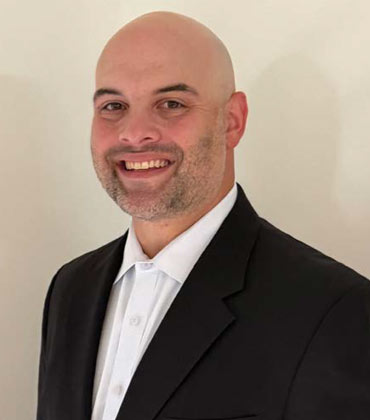
Todd Greenberg
Todd Greenberg, the Chief Risk Officer at Alliance Equipment Finance, brings more than 16 years of experience in equipment finance risk management. Throughout his career, he has held senior risk leadership roles specializing in underwriting, credit risk and portfolio management.
Balancing Growth with Disciplined Decision-Making
Greenberg's perspective on risk has been shaped by a career that began as an entry-level credit analyst before progressing through roles at Nations Equipment Finance, Post Road Equipment Finance and Alliance Equipment Finance.
Along the way, he observed situations where sales and risk functions sometimes operated at opposite ends of the decision-making process. Rather than treating them as competing priorities, he sees them as functions that work best in collaboration.
Greenberg's objective is to say yes when a transaction represents a good investment, not just because it adds volume. Instead of taking a portfolio-based approach, every deal is assessed individually to determine whether the opportunity generates sufficient return to justify the associated risk.
A Solution-Oriented Approach to Risk
Greenberg views the risk function as a partner in helping transactions move forward by solving problems rather than immediately declining opportunities. His team approaches each opportunity with the objective of finding workable solutions, whether by addressing credit concerns or working through collateral-related issues. Utilizing creative solutions and structures, he and the AEF team enhance credit quality and reduce risk of loss on potential opportunities.
Decision-making also reflects the company's collaborative culture, with Greenberg and CEO Randy Hicks working hand-in-hand to reach consensus through collaborative discussion rather than relying on a single decision-maker.
While not every deal can be completed, the team’s first instinct is to resolve issues before concluding that an opportunity is not viable. Because they target customers with experienced management teams and focus on transactions secured by critical use assets, they have found that there are often resolutions mutually beneficial to both parties. That same mindset extends beyond underwriting. Rather than pointing to a single initiative that has strengthened portfolio performance, Greenberg emphasizes a proactive approach built on identifying potential concerns early. This includes continuous reviews of the portfolio, monitoring customers' financial condition and maintaining regular communication with borrowers.
When customers require payment relief or encounter challenges, the team is prepared to work with them when an appropriate solution exists, reinforcing a collaborative approach that balances customer needs with prudent risk management.
“By staying responsive to changing customer requirements while maintaining disciplined underwriting, organizations are better positioned to identify solutions that serve the interests of both the customer and the business.”
Balancing Flexibility with Risk Discipline
Greenberg acknowledges that increasing competition across the equipment finance industry can encourage lenders to adopt pricing or deal structures they may not be comfortable with. Alliance Equipment Finance instead remains committed to structures that the team considers appropriate, choosing not to pursue volume at the expense of underwriting discipline.
For Greenberg, protecting the business takes precedence over chasing volume. At the same time, he sees flexibility as an essential capability for risk organizations. As customer needs and market conditions evolve, organizations must be willing to reassess long-standing practices instead of assuming previous approaches will always remain effective.
By staying responsive to changing customer requirements while maintaining disciplined underwriting, organizations are better positioned to identify solutions that serve the interests of both the customer and the business.
Creating a Culture of Shared Responsibility
For Greenberg, effective risk leadership extends beyond credit decisions to the way people work together across an organization. His advice to future risk leaders is to remain solution-oriented, stay open to new ideas and be willing to work collaboratively with teams across finance, operations and sales.
He encourages leaders to be approachable, helpful and willing to contribute beyond their immediate responsibilities. Working closely with other departments creates stronger decisions because solving problems often requires support across the organization.
Greenberg credits the team assembled by the founders, including his long-standing collaboration with CEO Randy Hicks, for creating an environment built on trust, strong character and shared purpose. With everyone working toward the same goal, collaboration becomes a natural part of building a successful business.
The articles from these contributors are based on their personal expertise and viewpoints, and do not necessarily reflect the opinions of their employers or affiliated organizations.
