

European financial ecosystems are seeing increased emphasis on precision-driven capital allocation, where Asset management services play a central role in shaping portfolio outcomes for institutions and individual investors alike. In Europe, shifting capital flows and tighter coordination across markets are encouraging more disciplined investment approaches, where risk exposure is actively balanced against long-term financial objectives. This has led to a stronger focus on portfolio diversification across sectors and geographies, improving resilience during periods of volatility. Institutional investors are also relying more on structured oversight to maintain consistency in decision-making, especially in multi-market environments where regulatory frameworks differ.
Asset Management Services Reshape Investment Strategies Across Europe
Choosing AI for Financial Decision Precision
For software development executives choosing AI-based financial systems, the central question is no longer whether algorithms can accelerate analysis. It is whether the system can translate complex pricing, risk and market signals into decisions that leaders can trust before capital, product capacity or customer confidence is exposed. Finance teams in this sector work inside compressed release cycles, shifting revenue models and constant pressure to prove that new digital services can scale without adding avoidable cost. A weak system gives dashboards; a serious system improves the timing and quality of commercial judgment.
Europe's AI Revolution: Shaping the Future of Financial Services
Financial institutions across Europe are entering a new phase shaped by artificial intelligence. The shift is not limited to efficiency gains but extends into how services are imagined and delivered. AI has moved from experimental adoption into the core of financial strategy. Banks, insurers and fintech firms are redesigning operations around intelligent systems that can learn, adapt and respond in real time. This transformation is redefining customer expectations and competitive dynamics across the region.
Choosing Asset Management for Capital under Pressure
Idle capital has become harder to defend when cash balances lose buying power, borrowing costs stay uneven, tax bills cut into returns and familiar bank products do not always match the way owners manage risk. Asset management decisions in business financing sit closer to balance-sheet discipline than portfolio preference. The buyer is not only asking where money can earn a return. The sharper question is how capital will behave when inflation and tax exposure narrow the room for error.
Harnessing AI in Financial Operations: A New Era of Efficiency

Financial operations have long relied on structured processes, meticulous record keeping, and careful analysis to support organizational decision-making. As the volume and complexity of financial data continue to grow, traditional manual methods are becoming less efficient and more prone to inconsistencies. In response, organizations are increasingly adopting artificial intelligence-driven automation to streamline workflows, improve accuracy, and enhance the overall quality of financial insights. This shift reflects a broader movement toward data-centric management, where speed, precision, and adaptability are critical to maintaining competitiveness.
Active ETFs: Bridging the Gap Between Tradition and Innovation in Investment Management
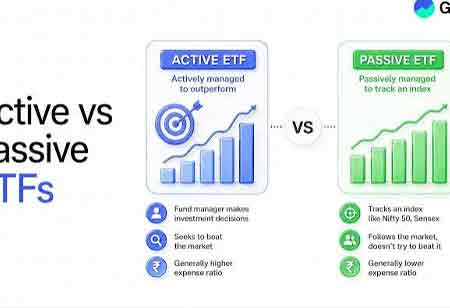
In recent years, investment management has seen a quiet revolution as a once-niche product has grown into a core strategic tool. Actively managed exchange-traded funds, or active ETFs, are changing the way professional and individual investors approach investing, risk management, and portfolio construction. They combine the flexibility and transparency of traditional ETFs with the decision-making intent of active management, prompting asset managers to reconsider both product design and client solutions. The result is a significant shift in strategies and thinking across the entire investment ecosystem.
Building Trust and Speed in AI-Driven Financial Data Automation

Financial institutions face a persistent tension between speed and certainty. Decision-makers are expected to respond to market movements in near real time, yet the underlying data remains fragmented across sources, formats and systems. Introducing automation alone does not resolve this pressure. The real challenge lies in ensuring that automated outputs remain accurate, auditable and aligned with internal governance standards. Many organizations have discovered that layering artificial intelligence on top of disconnected data environments only amplifies risk rather than improving decision quality.
Building Trust in Financial Decisions with Credit Reporting Services
Credit reporting services form the backbone of modern financial systems by enabling lenders, businesses, and consumers to assess creditworthiness with confidence. These services collect, analyze, and distribute credit-related information that influences lending decisions, interest rates, insurance pricing, employment screening, and broader financial planning. As economies digitize and access to credit expands, the demand for reliable, timely, and comprehensive credit data grows rapidly.
Designing a Disciplined Path to Tax Resolution Excellence

Tax relief and resolution services have shifted from episodic intervention to sustained financial correction, driven by tighter enforcement timelines, deeper data scrutiny and increasing coordination between federal and state authorities. Executives responsible for selecting such services are no longer evaluating providers solely on negotiation outcomes. They are assessing whether a firm can impose structure on disorder, maintain compliance continuity and guide clients beyond immediate liability toward lasting stability.
Minimizing Tax Liabilities: Essential Services for Business Resilience

The process of handling tax liabilities has become more difficult because business financial conditions are constantly changing. The combination of changing laws, increased tax authority investigations, and business requirements for maintaining profits leads to tax-related problems that overwhelm companies.
Tax relief and resolution services currently function as critical support systems that companies require to handle their tax problems while they work to resolve disputes and decrease their tax obligations. The company provides an all-inclusive service to assist organizations that deal with tax difficulties by delivering expert knowledge and guidance, together with compliance solutions that minimize their operational hazards.
Curated Active ETFs for a More Complex Investment Era

Active exchange-traded funds and investment management platforms are entering a period of structural reassessment. Market leadership has narrowed and broadened in rapid cycles, correlations have shifted, and the traditional 60/40 portfolio has delivered uneven protection against inflation and drawdowns. Executives responsible for allocating to active ETF solutions are confronting a dual mandate: preserve capital across regimes while sustaining competitive returns in an environment that no longer rewards static asset mixes.
The European Investment Landscape: Consulting for Success
The current economic environment requires people to seek professional investment advice more than ever before. European investment consulting services function as essential support systems for both businesses and individual investors who need to understand complex financial markets. Investment consulting services in Europe deliver specialised solutions that help clients create effective investment strategies while reducing risks and seizing market possibilities.
Allocating Capital In an Era of Inflation and Political Flux
Institutional investors face a climate defined by inflation uncertainty, rising debt burdens and increasingly fluid political systems. Preservation of capital now depends less on broad market exposure and more on disciplined asset allocation grounded in macroeconomic judgment and governance oversight. Investment consulting must therefore move beyond manager selection toward a structured interpretation of interest rate cycles, valuation dislocations and political risk transmission.
Finance Directorship Services: Enabling Structured Financial Leadership

Finance directorship services have emerged as a strategic resource for organizations seeking disciplined financial leadership without the constraints of permanent executive structures. These services bridge the gap between operational finance management and board-level governance by delivering experienced oversight tailored to organizational scale, complexity, and growth objectives.
Finance Directorship Services in an Era of Regulatory Intensity

Finance directorship services have shifted from a narrow compliance function into a defining requirement for organizations navigating regulated capital structures. Lending institutions, insurers and structured finance participants now expect a dedicated financial director who satisfies formal requirements while also ensuring continuity across entities that must remain active, accurate and legally sound. For executives responsible for governance decisions, the challenge lies less in locating a credentialed name and more in securing confidence that nothing essential will be missed when timelines compress and documentation multiplies.
Navigating Investments: The Power of Financial Planning

In a world increasingly driven by financial complexity, the importance of professional investment advisory and financial planning services cannot be overstated. As individuals and businesses seek to secure their financial futures, make informed decisions, and navigate the intricacies of global markets, the expertise of financial professionals has become more crucial than ever.
Establishing Standards In Cryptocurrency Payment Services

Cryptocurrency payment services have moved from experimental pilots to board-level consideration as financial leaders weigh how digital assets can coexist with established payment rails. In financial technology environments, the pressure is not driven by novelty but by practical concerns: cross-border commerce still carries friction, settlement timing remains uneven and merchants face growing expectations from digitally fluent customers. Executives evaluating this category are less interested in ideological debates about decentralisation and more focused on whether crypto payments can behave like dependable infrastructure rather than specialist tools