
A featured contribution from Leadership Perspectives, a curated forum for banking, financial services, and fintech leaders, nominated by our subscribers and vetted by the Financial Services Review Editorial Board.

Farmers & Merchants State Bank
Building Community Banking for the Future
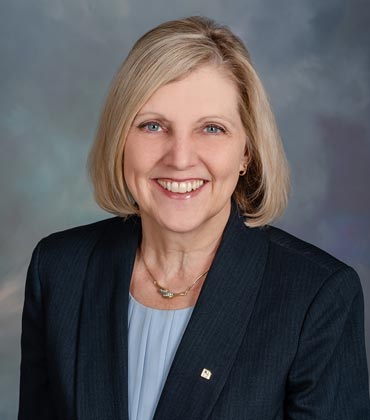
Barbara Britenriker
Having built her career from customer-facing account opening to roles across operations, finance, and retail banking, she brings a well-rounded perspective to leadership. Her experience, combined with formal education in management and leadership, has reinforced her belief that effective leaders understand the challenges their teams face.
As CFO, she focuses on disciplined financial planning, timely reporting, and sustainable performance without burnout. She believes leadership is measured by how teams grow, support one another, and succeed together, fostering a culture where mentorship, collaboration, and genuine care drive lasting success.
Modernizing Community Banking
Community banks face several challenges today, but each also presents an opportunity. The biggest risk is complacency. We cannot assume what works today will last tomorrow. We must embrace multigenerational customers as their expectations evolve. Different segments of our customer base will want something different from what they did yesterday. Do we truly know what our customers want? Is our relationship lasting? We exist because of our communities and customers, and we reflect the communities we serve. To remain independent and vibrant, we must expand or modify our services and products.
“Banking is about more than transactions; it's about helping families buy homes, businesses grow and communities thrive."
AI presents challenges around implementation costs, governance, monitoring and developing expertise within the organization. AI-driven fraud is also increasing and challenging to combat. At the same time, AI offers a tremendous opportunity to improve efficiencies, allowing us to grow without adding staff. It is an exciting aspect of the changing environment in which we operate. At F&M, customer experience and personal interaction remain at the heart of what we do. We continue exploring AI opportunities to enable customers to live their most fulfilling lives.
The financial industry owns stablecoins, the newest challenge to payment processing. As government backing, particularly those tied to the U.S. dollar, becomes more widely adopted, banks have seen other organizations take over parts of the payment process. In order to provide this avenue for payment to our customers, we will explore our options while also maintaining their deposits. After all, local deposits fund local lending.
F&M and the broader banking industry, serve our customers, shareholders, employees and communities with the products and services that help all thrive. In return, we seek a fair level playing field. This has become more challenging as credit unions purchase banks. By not paying Federal income tax and possibly State taxes on their operations, credit unions have an unfair advantage in both their daily operations and in the purchase of banks. This is a concern as banks continue to decline each year. Our ability to combat this is limited to speaking out on the issue.
We are also attempting to change taxation rules regarding the treatment under which credit unions operate. Credit unions play a vital role in financial services. Our concern is to ensure that institutions offering comparable products and services operate under comparable regulatory and tax frameworks. As credit unions have gained more bank-like powers, they should be treated the same for tax purposes. Time has eroded the “field of membership” so that credit unions are no longer representative of a common class of clients anyone can be in.
Leading with Accountability
All budgets and strategic planning include regulatory requirements. By building a 3-year strategic plan, we can adapt to regulatory changes while maintaining our good standing. F&M considers the legal impact of every action. Banking naturally meets regulatory requirements, and we meet them easily in how our business is set up. The negative cost stems from what I would term "policing" our clients’ activities. When the bank is required to report on activities by our customers that provide little value to the Bank itself, the cost of collecting and reporting data can hinder funding other projects that the Bank would find beneficial. At times, regulation may also trigger unintended consequences for the Bank that policy makers never anticipated. To balance these requirements, we actively comment on proposed regulations and, when necessary, assess the cost of regulatory mandates and include them in our project management.
Ultimately, regulatory responsibility exists to support safe, trusted banking, but financial leadership extends well beyond compliance. At its core, financial leadership is about helping people make sound decisions, both personally and professionally. At F&M, our strategy is straight-forward. We build connections that last. We work alongside our customers, live in the communities we serve and make decisions locally. We see our customers at the local stores, school and community events and we encourage all our employees to become involved in non-profit organizations by providing paid time off to participate. As you can imagine, many of our employees are the treasurers or officers in these organizations, providing financial leadership. We serve markets where local expertise matters and prioritize personal service over rates, creating stability through changing markets. We believe banking is about more than transactions; it’s about helping families buy homes, businesses grow, and communities thrive.
The Making of a Banking Leader
I encourage aspiring finance professionals to learn about the connectivity of the banking process. Building strong relationships across teams is just as important as developing technical expertise. I firmly believe in life-long learning, whether formal or everyday experiences, both within your area of expertise and in leadership. Seek mentors who exhibit behavior that resonates with you, as every career path offers different lessons.
Learn the art of listening, participate in cross-functional teams and projects, and remain flexible as circumstances change. A career in banking is exciting, fulfilling and will be what you make of it. Most importantly, remember that we all have setbacks along the way and the relationships you build will help you overcome and continue growing.
The articles from these contributors are based on their personal expertise and viewpoints, and do not necessarily reflect the opinions of their employers or affiliated organizations.
