
Financial Services Review: Specials Magazine
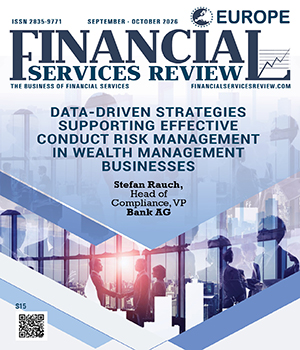
Some key non-financial risk exposures of financial institutions active in the Wealth Management industry stem from incidents driven by significant employee misbehaviour and internal fraud. Insufficiently managed conduct risk in the wealth management industry continues to lead to significant financial losses, loss of reputation, and mandatory scrutiny for affected financial institutions. Large instances may even harm customers' trust in the financial services industry overall. Key regulators such as the UK Financial Conduct Authority (FCA) and others increasingly focus on this type of non-financial risk and require institutions to establish and maintain an effective framework to measure and manage employee conduct risk. It is important to establish an effective control framework capable of identifying deviations from the expected norm in employee behaviour. Many financial institutions focus on cultural initiatives to positively influence the behaviour of their employees. However, the impact of cultural initiatives on employees' actual behaviour is difficult to prove, including to which extent such initiatives reduce residual risk levels of employee misbehaviour and fraud. Culture is expressed by the actual behaviour of employees "when the lights are switched off", i.e., when employees know their behaviour is not supervised. Therefore, cultural initiatives do not necessarily impact the behaviour of employees who are already prone to misbehaviour and fraud, which might be due to financial pressure, their sense of superiority or having the "right" to do so. Therefore, focusing on Culture is certainly a good thing to do, but in isolation, it is insufficient to address conduct risk. Regulators expect financial institutions to develop their conduct risk definitions and strategies and put in place a tailored framework to address the specific conduct risks of their business areas. In Wealth Management, conduct risk is particularly driven by a close relationship between
Wealth Management
The adage, ‘Don’t keep all your eggs in one basket,’ best applies to building and managing wealth in today’s dynamic financial landscape. The current market uncertainties and inflation have blurred the lines between monetary and life goals, making people call for an existential review of wealth management. In this gathering storm, individuals leaning toward wealth managers who prioritize their goals or life events are likely to weather financial headwinds and steer ahead. A leading wealth management and financial service provider, Cartlidge Morlan instils an empathetic, human element to wealth management with the motto, ‘nurture, protect, and enjoy,’ embedded in its DNA. “We prioritize flexibility and control when choosing investment strategies, policies, and vehicles, ensuring clients have a comforting financial cushion supporting their life goals,” says Julien Nurse, Partner, Cartlidge Morland. “Our team takes a hands-on approach when tailoring the portfolio to align with their personal preferences, investment objectives, and attitudes toward risks.” Cartlidge Morland boasts a ten-year portfolio performance track record on most of its offerings. Since its client base comprises high and ultra-high-net-worth individuals, from bankers, entrepreneurs, and investors to retired and working professionals, its services are divided into two. Its bespoke offerings include investment management service (IMS) for clients with over £500,000 in assets to invest. The portfolios are constructed from a combination of cash deposits and collective investment funds held via major investment platforms.

Credit Card Processing

The prevailing challenges in the financial sector
Romy Tognon Ribeiro, Head of Group Treasury, Digital Payments, and Credit Management, Rexel [EPA: RXL]
Payment Solution

Navigating Digital Transformation for Incumbent Banks
Ozgur Koc, Head of Digital Banking & Transformation, Credit Europe Bank N.V
Payment Solution

Future of AI in the Financial Sector
Pedro Mira Vaz, Chief Data & Analytics Officer, NOVO BANCO
Investment Services

Transforming Financial Licensing Services and Industry Trends
Yvan Roduit,Head Investment Advisory,Raiffeisen Group
Payment Solution

Digital Banking in the Palm of Your Hand
John O'Brien, Head of Contact Centre, CX, Digital & Banking Ops | Transformation Leader | Speaker | Strategist, PTSB

IN MY OPINION
Investment Services
Esg Risk Management In Banking: Pragmatic Insights and Roadblocks
Yaroslav Sovgyra, Head of Credit Risk (ESG and Portfolio Management), Lloyds Banking Group [LON: LLOY

LAST WORD
Financial Risk Management
Regulatory Technology and Digital Compliance
Maria Azinhal, Regulatory Compliance Manager, Caixa Geral de Depósitos
EDITORIAL
The CFO’s Role in Evaluating Litigation Finance
The modern Chief Financial Officer (CFO) is increasingly regarded as a strategic leader tasked with safeguarding an organisation's financial health and mitigating longterm risks. Litigation finance, a sophisticated financial arrangement in which third-party investors fund legal claims in exchange for a portion of the recovery, introduces distinct challenges for CFOs. To navigate these complexities, CFOs must balance potential rewards against costs and risks, requiring a deep understanding of the economics of litigation finance. This includes assessing probable outcomes, estimating financial recoveries, and comparing these against the cost structures proposed by litigation finance providers.
Managing the risks associated with litigation finance necessitates careful consideration of legal, reputational, and financial uncertainties. Participation in litigation finance could signal stakeholders that the company may face financial strain or rely heavily on external capital, potentially affecting market perception, stock price, or the company’s capacity to secure other financing options. CFOs must collaborate closely with legal teams to ensure the company maintains control over decisions and that the litigation finance partner’s approach is aligned with the organisation’s objectives.
To successfully integrate litigation finance into broader corporate strategies, CFOs must ensure that it aligns with the company’s financial plan, risk tolerance, and capital allocation priorities. Transparency is paramount, as CFOs are responsible for articulating how litigation finance supports the company’s long-term goals. As more organisations consider litigation finance as a tool for managing legal and financial exposure, the CFO’s role will continue to evolve, further reinforcing their position as critical strategic decision-makers.
The magazine features thought perspectives from Yvan Roduit, Head of Investment Advisory, Raiffeisen; Yaroslav Sovgyra, Head of ESG Risk, Lloyds Banking Group; and Maria Azinhal, Compliance Deputy Manager, Caixa Geral de Depósitos.
We hope these valuable insights from industry leaders featured in this edition will assist you in making informed decisions for your businesses.
