
Financial Services Review: Specials Magazine
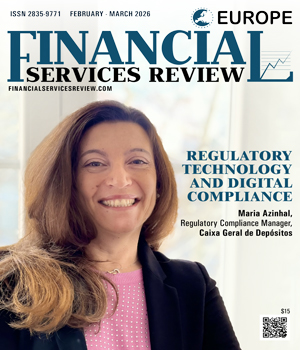
laundering prevention, and anti-financial crime are increasingly part of the common lexicon, and when scandals in large companies across diverse sectors result from unethical conduct or weak (or non-existent) risk prevention and management, it’s important to ask: can organizations continue using the processes of the past to control new behaviors? Managing compliance risk can be typified by the implementation of effective controls that prevent or mitigate legal and regulatory breaches. However, the increase in data and transactions carried out by consumers, as well as the complexity, demands, and constant growth of legislation and regulations applicable to each sector, have significantly increased the challenges faced by internal control areas of institutions, particularly those assigned to the compliance function. Faced with these current challenges and the growing trend toward digitalization in new areas of activity, it is no longer feasible to believe that old, manual processes will remain effective. Regardless of the degree of knowledge and professional experience that compliance professionals may have, it is humanly impossible to adequately monitor all necessary processes without the help of regulatory technology, such as data analysis tools, artificial intelligence, process automation, machine learning, and robotics. These technologies allow for continuous, real-time monitoring of activities and suspicious operations. The use of these digital tools to ensure legal and regulatory compliance is commonly referred to as digital compliance. While regulatory technology and digital compliance present significant challenges, they also offer opportunities and solutions to effectively control institutional activities, given the enormous volume of data and the complexity of constantly changing regulations.
Payment Solution
Why does Miracle Pay treat crypto adoption as a design challenge rather than deployment? Miracle Pay, a next‑generation crypto payments platform, is built around a deliberate constraint—crypto payments must deliver the same operational certainty merchants expect from traditional rails, with known prices at checkout. Predictable settlement, clean reconciliation and no guesswork. Meeting that standard requires treating crypto adoption as a design challenge rather than a technology deployment. Which merchant acceptance capabilities does Miracle Pay enable through existing point-of-sale infrastructure? The platform lets merchants accept Bitcoin, Ethereum and SOL through their existing point-of-sale (POS) infrastructure, including widely deployed terminal ecosystems such as Ingenico and PAX: no specialised hardware, no staff retraining, no complicated dashboards. A customer wants to pay with crypto; the merchant enters the amount, a dynamic QR code appears on the screen, the customer scans it with their preferred wallet and confirms. The blockchain transaction executes while the merchant receives payment in whichever currency they've configured, whether that's the original cryptocurrency or local fiat. "We behave like a normal payment rail," says CEO Unsal Koc. "The technology needs to be invisible. If merchants have to think about blockchain, we've already lost.".

Financial Risk Management

Skilled hedge advisors with deep expertise in financial risk management are key to enhancing financial stability and ensuring businesses secure favourable outcomes in structured financing. Noveo Finance has been a dominant force in this specialised field for the last 15 years, providing clients with hedging solutions that mitigate the impact of interest rate fluctuations, foreign exchange risks and inflation volatility. An independent consultancy firm specialising in financial risk management, Noveo Finance excels at advising clients on structured financing transactions, particularly in infrastructure projects that require substantial capital and long-term financial planning. Many of these come with extended financing terms, where interest rate sensitivity is a key factor. It works closely with project sponsors, utilities, independent power producers and financial investors to ensure that projects are structured to mitigate financial risks, shield against market fluctuations and maintain stability. "We provide tailored solutions built on our expertise, ensuring each client receives an optimised strategy suited to their specific project," says Oscar Fernandez España, managing partner. These strategies safeguard infrastructure investments by addressing financial uncertainties that arise from extended financing structures. Even minor interest rate fluctuations can significantly impact financial outcomes. For instance, a five-year facility carries a different risk profile than a 30-year loan, where prolonged exposure heightens financial vulnerabilities. To address this, the company structures hedging strategies that optimise financing conditions and allow sponsors to secure financial terms early, minimising exposure during negotiations. Noveo Finance strengthens financial stability by implementing pre-hedging strategies, reducing the risks posed by interest rate and foreign exchange volatility throughout the extended timeline of project finance transactions. This ensures investments remain financially sound despite shifting market conditions. Clients also approach the company for greater transparency in derivative pricing, particularly regarding cross-value adjustments, which include counterparty credit risk and funding value adjustments that influence pricing structures and transaction costs. These highly technical adjustments make expert monitoring critical to maintaining fair pricing and securing the best financial results. This is necessary for refinancing transactions, where restructuring existing hedging strategies can significantly optimise financial efficiency. It helps clients navigate these complexities, ensuring optimal pricing structures and financial outcomes.
Debt Collection Agencies
While many view debt recovery as a numbers game, STA International sees it differently—a people-first discipline built on global partnerships and client success. The company empowers businesses to recover debts with diligence, efficiency and a personal touch. Operating at the intersection of consumer and commercial collections, STA has adopted a hybrid model, enabling full-circle customer service, fuelling growth and earning client loyalty. Seamless Services for All Sectors At the heart of STA’s success is its dual-sector expertise, supporting Consumer and Commercial clients. With a strong heritage of consumer debt recovery, primarily in higher education, STA currently serves 95 percent of UK universities, helping them recover unpaid tuition and fees, often from international students. This is bolstered by an ever-growing market footprint in commercial debt recovery, spanning sectors such as construction, transport & logistics, professional services, plus many more. “Our hybrid approach, uncommon in an industry where most firms specialise in just one area, enables us to manage over 100,000 active consumer files while expertly handling the complexities of high-value commercial portfolios,” says Matt Quinn, Managing Director. Although the commercial caseload is marginally smaller than consumer, its overall value is often comparable, giving STA a strategic advantage that few can match. To support this integrated model, STA established its law firm, STA Legal. Built to handle the volume and complexity of consumer cases, STA Legal ensures smooth transitions from pre-legal collection to litigation, maintaining continuity and maximising client efficiency. A Strategic Shift and Cultural Transformation STA’s evolution accelerated in 2019 when a management buyout led by four directors, including Quinn, transitioned the company from a U.S.-owned subsidiary to an independent, director-led enterprise. This allowed STA to chart a new, UK-focused course towards adaptability, accountability and autonomy.

Credit Card Processing

The prevailing challenges in the financial sector
Romy Tognon Ribeiro, Head of Group Treasury, Digital Payments, and Credit Management, Rexel [EPA: RXL]
Investment Services

Cryptocurrency Payment Process In Retail - Transition to "A New Normal"
Dalibor Sovic, Director of e-commerce, Konzum
Financial Analytics

Agile Mindset in a Nutshell
Samuel Calan, Head Web Frontend, Raiffeisen Switzerland
Investment Services

The Future Of Banking: Technology, Data, And Customercentricity
Stefan Stignas, Head of Strategic Ownerships & Partnerships, SEB [STO: SEB-A]
Investment Services
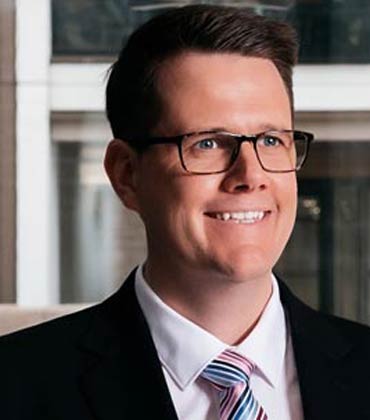
Navigating the Banking Landscape - Embracing Tech Solutions and Collaboration for Risk Management
Paul Fosse, Group Director – Group Head of Banking, Treasury, Investments & Custody, JTC Group [LSE: JTC]

IN MY OPINION
Debt Collection Agencies
Intelligent Lending
Hugo Assagra, Group Head of Credit Risk Strategy, OSB Group [LSE: OSB]

LAST WORD
Investment Services
Risk Management Enters the New Age
Sotiris Papakonstantinou, Head of Risk Management, Optima bank [ATH: OPTIMA]
IN FOCUS

Building Trust in Digital Finance: Europe's Journey with Cryptocurrency Payments
Unified regulation and the efficiency of digital settlement models are enveloping European cryptocurrency payment service providers into the professionalised pillar of modern commerce.

Europe's Financial Security Evolution: Addressing New Threats and Opportunities
Advanced cybersecurity, strong regulatory frameworks, and consumer-driven demands for safer digital financial experiences across banking and payment ecosystems define Europe’s financial security landscape.
EDITORIAL
Redefining Trust in Modern Payments
Across Europe, financial innovation is being evaluated not by novelty, but by operational certainty and regulatory resilience. Europe’s financial sector is recalibrating digital payments and risk frameworks to deliver predictability, governance, and measurable control in increasingly complex markets.
A central highlight of this issue is Miracle Pay, recognised as Top Cryptocurrencies Payment Service in Europe 2026. Miracle Pay approaches crypto adoption as an infrastructure design challenge rather than a technology experiment. By separating checkout experience, transaction orchestration, and regulated settlement rails, the platform enables merchants to accept digital assets with rate certainty, controlled settlement paths, and clean reconciliation. Dynamic rate locks, confirmation monitoring, and compliance aligned conversion partners allow crypto payments to function with the operational discipline expected of traditional payment rails, positioning digital assets as a dependable commerce mechanism rather than a speculative overlay.
The broader financial landscape reflected here underscores a parallel shift in risk and credit management. Institutions are integrating artificial intelligence and machine learning into lending journeys while balancing explainability and regulatory oversight. Predictive modelling, open banking data, and automation are reshaping underwriting, but governance and transparency remain central to sustainable adoption.
Leadership insights further sharpen this focus. Hugo Assagra, Group Head of Credit Risk Strategy at OSB Group [LSE: OSB], outlines how AI and machine learning enhance affordability assessment, propensity modelling, and customer journey personalisation while emphasising the importance of explainability and regulatory alignment. Sotiris Papakonstantinou, Head of Risk Management at Optima bank [ATH: OPTIMA], explores how risk functions must evolve through data analytics, remote collaboration, and structured governance frameworks to remain effective in a technology driven era.
These perspectives point toward a clear trajectory. Financial innovation in Europe will endure through systems that combine digital capability with disciplined oversight. Readers are invited to examine how payments, credit, and risk management are being recalibrated for durable growth.
