The digital economy has reshaped how individuals and families approach financial planning. Traditional wealth management once depended heavily on manual portfolio reviews and periodic meetings with advisors. Today, the environment is defined by real-time insights, digital platforms and data-driven intelligence. Investors expect seamless access to their financial information, and advisors are responding with modern wealth management solutions that combine advanced analytics, automation and intuitive digital tools.
Top Wealth Management Solutions in Florida 2026
Wealth management solutions help advisory firms manage client portfolios, reporting and service workflows through integrated technology support. With a focus on data visibility, advisor productivity, platform scalability and client engagement, they support stronger practice management and more consistent wealth advisory delivery.
Solutions

SS&C Black Diamond Wealth Solutions
Why the Right Wealth-Tech Partner Matters
Steve Leivent, Senior Vice President and Co-General Manager
As wealth management firms grow, so do their technology needs. Many firms have built their technology ecosystems over time, adding capabilities such as portfolio management, reporting, trading, client communication, and trust accounting as new opportunities and requirements emerge. While these solutions often serve their individual purposes well, firms increasingly recognize the value of bringing them together within a more connected operating environment.
State of Industry
Deep Dive
The Evolving Standard for Integrated Wealth Management Platforms
Wealth management leaders face a persistent tension between scale and precision. Firms are expected to serve increasingly diverse client segments while maintaining consistency in reporting, compliance and client experience. Fragmented systems have long complicated this balance, forcing advisors to stitch together point solutions that rarely communicate cleanly. This fragmentation introduces operational friction, weakens visibility into firm performance and limits the ability to deliver tailored client engagement at scale. As advisory firms grow through acquisition or expand into new asset classes, these inefficiencies compound, making platform consolidation less of a preference and more of a necessity.
Leadership Perspective
Citadel Credit Union
Helping Clients Prepare For Life, Not Just Retirement
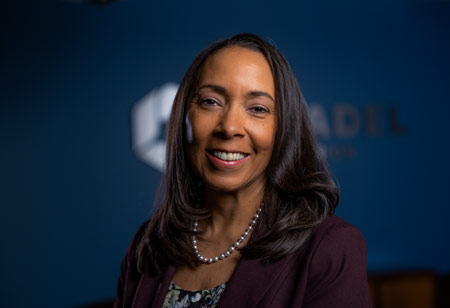
Sheri Perkins, Chief Wealth Officer, Head of Wealth Management
Sheri Perkins is a financial services executive with extensive leadership experience in banking and wealth management. She specializes in strategic growth, client relationships and team development while championing financial wellness, community impact and high-performing teams.
Wealth Management Solutions in Florida News
Wealth Management Firms Face a More Demanding Florida Client Base
Thursday, October 08, 2026
Wealth management decisions in Florida are becoming harder to separate from the practical circumstances of the clients being served. Advisers may be working with households whose financial priorities change as income, assets or family responsibilities shift. That puts pressure on firms to make their advice useful beyond a single investment decision.
A wealth management offering can appear comprehensive and still leave gaps in the client experience. An adviser may have a solid investment process, yet clients can run into difficulties when their financial decisions extend into areas that call for different kinds of planning. The point is not simply to add more services, but to make sure the advice reflects how clients actually manage their finances.
That can be challenging for firms serving a wide range of Florida clients. Someone preparing for retirement may approach wealth differently from someone who is still working while managing their assets. Their concerns may overlap, but the timing and potential impact of their decisions can be quite different.
That difference also affects how advisers communicate. Financial recommendations can become difficult to act on when clients are given too much information without a clear sense of what needs attention first. Wealth management firms, therefore, have to consider how advice moves from the adviser’s analysis into the client’s day-to-day financial choices.
Technology can help, but it does not remove that responsibility. Digital tools may make account information easier to access or reduce some manual work for advisers. They can also create another layer for clients to navigate if the technology is not connected to the way advice is delivered.
The quality of the underlying information matters as well. An adviser working from incomplete or outdated client information may have difficulty understanding what has changed since the last review. Regular conversations remain important because financial circumstances rarely stay fixed for long periods.
This is where wealth management solutions need to fit into the adviser’s day-to-day workflow. A useful system should make it easier to keep client information organized without getting in the way of professional judgment. The aim is not to take the adviser out of the process, but to cut down on administrative work that can take attention away from client conversations.
Client expectations add another layer to the equation. People may want quick access to their financial information, but that does not necessarily mean they want advice reduced to a self-service experience. Firms have to strike a practical balance between convenience and the personal judgment clients still expect from a wealth management relationship.
For Florida wealth management providers, the practical question is how well their processes keep pace with changing client circumstances. A solution that makes information easier to manage may be useful, but its value ultimately depends on whether advisers can turn that information into advice clients can understand and use. That makes the client workflow, rather than the feature list, an important measure of fit.
The Adviser Workflow Is Becoming Part of the Wealth Management Equation
Thursday, October 08, 2026
The administrative work behind wealth management can quietly consume time that advisers would rather spend with clients. Information has to be collected, reviewed and updated before a financial conversation can become productive. When those steps depend heavily on manual processes, even routine client work can become harder to manage as a practice grows.
Florida wealth management firms evaluating new solutions have more to consider than the client-facing experience. The internal workflow matters just as much. A system may look useful during a demonstration, but the real test comes when advisers use it regularly as part of their everyday client work.
Data entry is one pressure point. Information that has to be entered more than once creates additional work and increases the opportunity for inconsistencies. Those problems may not become visible immediately. They can surface later when an adviser is preparing for a review or trying to understand why two records do not match.
Handoffs can cause similar problems. Wealth management work often involves several people within a firm. When information moves from one employee to another, it may not always be clear who is responsible for the next step. A process that looks simple on paper can slow down when tasks fall between roles.
That makes it important for firms to see where work stands when evaluating technology. Advisers should be able to check the status of a task without having to search across different systems or ask colleagues for updates. This is not only about saving time. Better visibility can also show where work is getting held up.
Implementation brings another concern. A new platform changes how employees handle tasks they may have been doing in the same way for years, even if the technology itself is easy to use. Staff still need time to learn the new process and point out problems that may not come up during initial testing.
Training can bring some of those issues to light. Employees who work with the system every day are likely to notice awkward steps that may not be obvious to decision-makers seeing the software in a demonstration. Their feedback can show whether the new process actually makes work easier or simply shifts the same administrative burden into a different system.
Integration also needs to be considered. A wealth management firm may already rely on established systems and processes, and replacing one tool does not necessarily eliminate the work around it. If employees still have to move information manually between systems, some of the administrative burden remains.
The cost question follows from there. Firms should consider not only the price of a technology purchase but also the time required to implement it and adjust existing workflows. A lower-cost system may prove less attractive if employees spend significant time compensating for gaps in the process.
For Florida wealth management firms, technology decisions are therefore closely tied to how work gets done behind the scenes. The strongest fit may not be the system with the longest feature list. It may be the one that removes a specific source of administrative friction without creating another set of tasks for the people expected to use it.
Wealth Management Technology Needs a Clear Owner After Deployment
Thursday, October 08, 2026
A wealth management solution can be selected carefully and still create problems after implementation if nobody clearly owns the process. Responsibility becomes particularly important when information is incomplete, a task is delayed or a client request does not move as expected. Without clear ownership, small issues can remain unresolved longer than they should.
For Florida wealth management firms, this raises a practical question about what happens after a new system becomes part of daily work. The initial purchase often receives considerable attention because costs, features and implementation requirements have to be assessed. The less visible question is who will monitor the process once employees begin relying on it.
Ownership does not mean that one person has to handle every issue. Different parts of a workflow can belong to different employees. What matters is that everyone knows who is responsible when something goes wrong. Employees should also know where to report a problem and who can take care of it.
This becomes particularly important when a system produces information that does not seem right. An adviser may question a figure while another employee is responsible for the record behind it. If nobody is sure how that discrepancy should be resolved, the issue can move between teams without getting a clear answer.
The same can happen with client requests. An adviser may receive a request that needs to be handled by someone else. If that handoff is unclear, the adviser may end up following up manually to find out what is happening. The client can then face a delay even though everyone involved assumes someone else is handling the task.
Regular reviews can help firms spot these gaps. Instead of waiting for a client to complain, managers can look at where work is slowing down and which steps lead to repeated questions. That gives them a clearer basis for making workflow changes than relying only on what was planned when the system was first introduced.
Employee feedback matters here, too. Staff members who work directly with a system will see problems that may not be obvious to the people who selected it. A recurring data issue or confusing workflow step can become part of everyday work if nobody has responsibility for correcting it.
The timing of a change also matters. A firm introducing new wealth management technology while employees are already adjusting to other process changes may have less time for training and feedback. The system may work as intended, but adoption can still be uneven when employees are asked to adjust to too many changes at once.
That makes post-deployment management part of the technology decision rather than an administrative detail. Firms need a way to review whether the system is working as intended, where employees are encountering friction and who is responsible for fixing recurring problems.
For wealth management providers in Florida, the longer-term test of a technology investment may therefore be less about the initial rollout than the discipline that follows it. A system becomes more useful when responsibility for its performance is clear and employees have a practical route for raising problems. That is where implementation moves from a technology purchase into an ongoing management task.
Wealth Management Solutions in Florida Info
Q1
What Do Top Wealth Management Solutions Help Clients Manage?
Top Wealth Management Solutions help individuals and families organize investments, retirement goals, tax considerations, estate plans and long-term financial priorities. Rather than treating each decision separately, these services connect different parts of a financial plan so choices made today support future goals. Depending on the provider, support may include portfolio management, financial planning, risk management, retirement income planning and wealth preservation. The focus is on creating a structured approach that can adapt as financial circumstances change.
Q2
What Services Are Commonly Included in Wealth Management Solutions?
Top Wealth Management Solutions can include investment management, financial planning, retirement planning, tax-efficient strategies, estate planning and risk management. Some providers also coordinate insurance, charitable giving, cash flow planning and wealth transfer strategies. The exact mix depends on a client’s financial position, goals and stage of life. Comprehensive wealth management services are generally designed to bring these areas together rather than leave clients to coordinate separate financial decisions on their own.
Q3
Why Is Demand for Top Wealth Management Solutions Growing?
Demand for Top Wealth Management Solutions is influenced by increasingly complex financial decisions, changing market conditions, retirement concerns and the need to manage wealth across different stages of life. Individuals may need to balance investment growth with liquidity, taxes, income needs and asset protection. Business owners and families may also face succession and wealth transfer decisions. These pressures make coordinated financial planning more valuable, particularly when financial choices involve several interconnected risks and long-term consequences.
Q4
How Should Clients Evaluate Wealth Management Providers?
When evaluating Top Wealth Management Solutions, clients can consider the provider’s planning approach, investment philosophy, fee structure, credentials, communication practices and range of services. Transparency is important because costs and account requirements can differ considerably. Clients should also assess whether the provider understands their financial objectives and offers regular reviews as circumstances change. A strong relationship should make complex financial decisions easier to understand while keeping recommendations aligned with clearly defined goals.
Q5
How Do Wealth Management Solutions Create Long-Term Value?
Top Wealth Management Solutions can create value by helping clients coordinate investment decisions with retirement, tax, estate and risk considerations. This integrated approach can improve financial organization and help identify potential gaps before they become larger problems. Regular portfolio reviews and planning updates also allow strategies to respond to changes in income, markets, family circumstances or financial priorities. The value therefore extends beyond investment performance to include greater clarity, risk awareness and disciplined long-term planning.
Q6
What Role Do Technology and Expertise Play in Modern Wealth Management?
Top Wealth Management Solutions use technology and professional expertise to improve planning, reporting, portfolio monitoring and client communication. Digital platforms give clients easier access to financial information and help advisors review portfolios and track changes. However, technology works best when supported by experienced advisors. Financial goals, risk tolerance and personal circumstances still require careful judgment. Strong wealth management combines digital tools with human guidance to help clients make informed financial decisions.
