
A featured contribution from Leadership Perspectives, a curated forum for banking, financial services, and fintech leaders, nominated by our subscribers and vetted by the Financial Services Review Editorial Board.

Capital One
Building Risk Through Institutional Memory
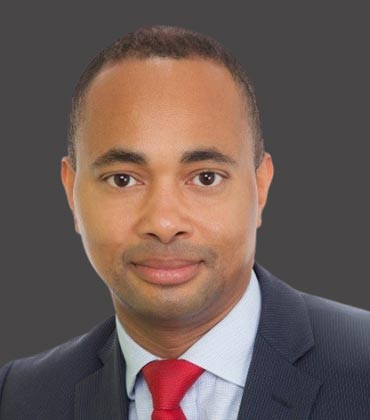
Hayseworth Hylton
Hayseworth Hylton is Chief Risk Officer for the Commercial Bank at Capital One. He has spent more than two decades in banking and capital markets risk, audit and governance roles across global financial institutions. His career has centered on understanding how controls work in practice and how risk frameworks support business decisions when markets become less predictable.
Managing Risk Across Different Banking Cycles
Commercial banking risk has become harder to define in simple credit terms. Rising interest rates, shifting borrower conditions and growing regulatory expectations have expanded the role of risk leaders beyond loss prevention. They are increasingly expected to help businesses understand where they can continue to lend, invest and grow.
Hylton’s career path is notable because it has been built across both internal audit and business risk functions. Before joining Capital One, he held senior audit leadership roles at HSBC, UniCredit and MUFG, concentrating on capital markets activities and governance oversight. That background gives him an unusually broad view of how risks emerge across business lines and how control failures often begin as communication gaps between teams.
The role he plays at Capital One Commercial Bank is one that is at the crossroads of strategy and governance in uncertain times. The position involves striking a balance between being careful and being supportive of customers who rely on capital access.
Keeping Governance Close to Business Decisions
Large financial institutions generate enormous volumes of information about customers, exposures and market conditions. The challenge is rarely a lack of data. The harder task is translating that information into decisions that can be used by bankers and senior executives.
Hylton’s experience in audit leadership suggests a long-standing focus on governance discipline and accountability. Internal audit functions provide a view across businesses that few executives possess. They reveal where policies are working and where assumptions break down under pressure.
That perspective is particularly valuable inside commercial banking, where credit decisions often involve incomplete information and changing economic conditions. Risk leaders are expected to challenge assumptions without becoming obstacles to growth. The work depends on credibility and on an understanding of how business decisions are made in practice.
The commercial bank’s risk function therefore serves as an ongoing source of judgment rather than a separate compliance exercise. Maintaining that connection between governance expectations and front-line decisions is becoming a defining responsibility for chief risk officers.
Building Resilience Through Experience
Financial services firms continue to face a mix of pressures that include changing regulations, technology risks and economic uncertainty. Institutions need leaders who understand both the mechanics of controls and the realities of operating businesses.
This is evident through Hylton's career development. He has moved from being a consultant to becoming an audit executive then a chief risk officer. His career path demonstrates consistent movement towards roles which require enterprise-level judgment rather than specialized skills. His work experience in various international banks also gives him insight about other regulatory environments and risk cultures.
Commercial banks' resilience can be determined by the ability of the leaders to spot new problems as they emerge and analyze whether the controls in place still work. This aspect is not always clear to clients and investors, yet it determines how confident an institution is in taking up growth opportunities.
The leadership shown by Hylton demonstrates the principle behind risk management. Knowledge and proper governance of the institution create an environment for making decisions. At a time when commercial banks are facing ongoing uncertainty, this combination is among the best risk leadership practices.
The articles from these contributors are based on their personal expertise and viewpoints, and do not necessarily reflect the opinions of their employers or affiliated organizations.
