


Weekly Brief
×Be first to read the latest tech news, Industry Leader's Insights, and CIO interviews of medium and large enterprises exclusively from Financial Services Review
A featured contribution from Leadership Perspectives, a curated forum for banking, financial services, and fintech leaders, nominated by our subscribers and vetted by the Financial Services Review Editorial Board.

Foundation Source
Driving Revenue Transformation In the Age of Embedded Finance Through Philanthropy
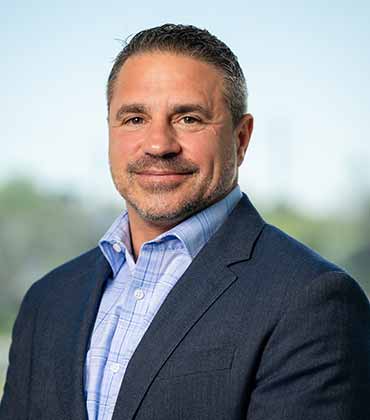
Louis D'addario
Louis D'Addario is a high-growth sales and revenue leader with a strong track record of building high-performing teams, scaling enterprise partnerships and driving growth across private and publicly held companies. At Foundation Source, he helps lead the company's evolution from a traditional provider of philanthropic services into a platform that embeds charitable planning directly within wealth management ecosystems, reflecting broader shifts toward integrated financial infrastructure and recurring revenue models.
In an interview with Financial Services Review, D'Addario shared insights on revenue strategy, evolving fintech partnerships and approaches to driving growth in a rapidly changing financial landscape.
Lessons From a Career in Financial Services Technology
Throughout my career in financial services technology, I have experienced bull markets and bear markets, as well as countless regulatory changes. Each scenario has offered a unique lens through which I have learned to lead. In every market condition, opportunities for sales and revenue arise, and the key is to remain attuned to trends and adjust strategies accordingly. Early in my career, I realized the importance of not putting all my eggs in one basket. Maintaining a diverse pipeline of deals and partnerships is essential for sustaining growth and resilience.
What I have learned is that leadership in revenue is not about rigidly following a single plan. It is about the agility to recognize shifts, anticipate client needs and pivot quickly when the market demands it. Sustainable growth comes from building platforms and partnerships that solve structural industry challenges rather than simply selling products. There is an art to balancing vision with pragmatism, and it is a lesson that has been reinforced time and again through both prosperous and challenging times.
Balancing Short-Term Gains with Long-Term Relationships
One of the more delicate challenges in my role has been balancing immediate revenue targets with cultivating long-term client relationships. The approach often depends on the stage of the company and its overarching objectives. Pipeline management becomes a critical tool in achieving this balance, ensuring a healthy mix of deal types and sizes. While some relationships may not yield immediate returns, strategic partnerships often create compounding value over time.
Increasingly, those relationships are built around recurring platform adoption rather than one-time transactions. Revenue is important, but it must be paired with the cultivation of trust, strategic alignment and long-term engagement. Some of the most rewarding partnerships are those where the payoff comes gradually, relationships in which clients grow with you and provide opportunities across multiple layers of service.
Integrating Charitable Planning Within Wealth Management
As wealth management evolves toward more holistic planning, philanthropy has emerged as a powerful avenue for building trust and deepening client relationships. Advisors increasingly seek ways to connect with clients on a personal level, and charitable giving offers a unique opportunity to do so. Beyond financial incentives, philanthropy allows advisors to have meaningful conversations with clients, understand their values and help them leave a legacy that resonates across generations.
“There is an art to balancing vision with pragmatism, and it is a lesson that has been reinforced time and again through both prosperous and challenging times.”
At Foundation Source, we see philanthropy increasingly becoming part of the broader wealth management infrastructure rather than a standalone service. Platforms are evolving beyond traditional donor-advised funds by embedding giving capabilities within broader wealth dashboards. Clients can now view philanthropic portfolios alongside traditional investments, with unified reporting on both impact and tax efficiency.
This integration not only strengthens advisor-client relationships but also helps advisors engage younger generations, who increasingly expect financial strategies to align with their values. Philanthropy is no longer simply a planning tool; it is becoming a meaningful component of holistic wealth management.
Driving Enterprise Adoption Through Tangible Value
Experience has taught me that enterprise adoption of financial platforms hinges on delivering tangible value. Organizations respond when a solution either drives revenue or creates efficiencies that improve margins. However, product capabilities alone are not sufficient. Enterprise adoption rarely fails because of technology alone; more often, it breaks down because of organizational misalignment.
Equally crucial is the commitment of the home office. When executive leadership is fully invested, adoption accelerates. Without this alignment, initiatives often become fragmented across advisor teams, compliance groups and operations, preventing organizations from realizing the full value of a platform. Enterprise success requires a combination of strong product capability, organizational endorsement and alignment across leadership, technology and client-facing teams.
The Evolution from Vendor to Embedded Partner
The relationship between fintech platforms and wealth management firms has undergone a profound shift over the past several years. Historically, firms maintained a cautious distance from fintech vendors, often developing internal solutions to preserve their brand identity. Today, the model has evolved, with fintech platforms increasingly embedded within advisor workflows and serving as critical infrastructure.
This shift has fundamentally changed the nature of partnerships. Revenue leaders increasingly need to think more like ecosystem architects than software sellers. Long-term partnerships are now built around shared workflows, data interoperability, compliance alignment and client outcomes.
As fintech technologies become more interchangeable, contracts must be structured to ensure sustainability and mutual benefit. The embedded model allows firms to differentiate themselves while leveraging specialized technology behind the scenes. As a result, partnership discussions increasingly center on long-term alignment, recurring value creation and collaborative growth.
Adapting Revenue Strategies In A Data-Driven World
The pace of evolution in financial technology is accelerating. Embedded finance represents one of the most significant structural shifts, weaving payments, lending, insurance and investments directly into non-financial platforms.
Moreover, it generates vast amounts of data that, when combined with AI, can produce insights that unlock entirely new revenue opportunities. However, AI alone will not be the differentiator. The real advantage will come from combining trusted data, embedded workflows and contextual intelligence that helps advisors better serve clients.
I have found that the key to thriving in this environment is moving from product-centric to platform-centric models, layering recurring revenue streams on top of transactional income. This approach stabilizes baseline revenue while creating opportunities for expansion, deeper engagement and long-term value creation.
The Power of a Strong Team
Finally, no strategy or framework alone can sustain growth. Throughout my career, I have been fortunate to work alongside exceptional teams. The guidance, insight and dedication of talented colleagues have strengthened my ability to make informed decisions.
One of the most important pieces of work in recent years has been building stronger alignment across revenue, implementation, operations and client success. Creating that cross-functional discipline has strengthened execution, improved scalability and better positioned organizations to navigate periods of rapid change.
When teams are aligned around shared outcomes, the organization becomes more agile and resilient. Even the most sophisticated strategies are limited without a team capable of executing them. Together, teams navigate complexity, seize opportunities and create lasting impact.
Building for the Future
As I reflect on my journey, I recognize that the fintech landscape will continue to evolve at a rapid pace. Embedded finance, AI-driven insights and the integration of philanthropy into wealth management are not simply trends; they are reshaping the fundamental mechanics of revenue generation, client engagement and enterprise growth.
My approach has always been to embrace these shifts, pivot when necessary and build systems, partnerships and revenue models that are resilient, scalable and positioned for long-term success. Increasingly, that means thinking beyond individual products and focusing on platforms, ecosystems and recurring sources of value creation.
Ultimately, success in financial services technology depends on understanding the interplay between product capabilities, market dynamics and client needs. By remaining agile, investing in strategic relationships and fostering high-performing teams, organizations can thrive even amid rapid change. For revenue leaders, the opportunity lies in helping shape that future — building the partnerships, infrastructure and organizational alignment needed to turn industry transformation into sustainable growth.
The articles from these contributors are based on their personal expertise and viewpoints, and do not necessarily reflect the opinions of their employers or affiliated organizations.

Copyright © 2026 Financial Services Review. All rights reserved
