


Weekly Brief
×Be first to read the latest tech news, Industry Leader's Insights, and CIO interviews of medium and large enterprises exclusively from Financial Services Review
Financial Services Review: Specials Magazine
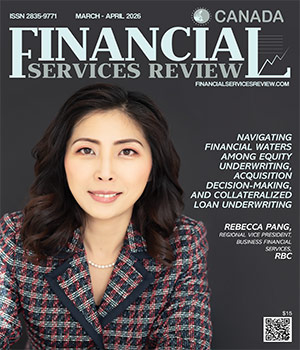
In the vast realm of finance, where decisions shape the course of investments and risk mitigation, three core processes stand out: underwriting an equity investment, making decisions on acquisitions, and underwriting a loan with collateral. These intricate financial maneuvers may seem distinct, but beneath their unique methodologies lie shared principles crucial for navigating the complexities of the financial landscape. In this article, we delve into the depths of each process, uncovering the intricacies that define them and the commonalities that unite them. 1. Equity Investment Underwriting: Underwriting an equity investment is akin to deciphering the genetic code of a company, aiming to unveil its intrinsic value and growth potential. This process requires a deep dive into the financial and operational aspects of the business, making it a meticulous endeavor for investors. Let’s break it down into some of the key components: a. The foundation of equity underwriting rests on fundamental analysis. Investors scrutinize a company’s financial statements, dissecting balance sheets, income statements, and cash flow statements. The goal is to understand the financial health of the company and evaluate its profitability, liquidity, and solvency. This process involves various financial ratios such as the price-to-earnings (P/E) ratio, return on equity (ROE), and debt-to-equity ratio. b. To determine the intrinsic value of a stock, investors often employ sophisticated valuation models. Discounted Cash Flow (DCF) analysis is a prominent method of forecasting future cash flows and discounting them to present value. Comparable company analysis and precedent transactions analysis are also valuable tools for benchmarking the target company against industry peers and previous transactions. c. Equity underwriters don’t operate in isolation; they consider broader market dynamics. Factors such as economic conditions, industry trends, and geopolitical events in
Top Financing Structure Service in Canada 2026
Pivot Financial strives to step forward the moment Canada’s big banks step back. Often small-to-mid-sized enterprises (SMEs), whether loss-bearing or operating in sectors banks deem too volatile, do not qualify for traditional credit. Yet, their capital needs remain real, threatening operational stability and expansion if not met on time. What lending gap does Pivot Financial address when traditional Canadian banks decline SME borrowers? Pivot has built its business to address this gap in the Canadian lending ecosystem, by providing secured, non-dilutive financing supported by receivables, inventory, equipment, real estate, or even intellectual property. The firm’s loans serve as bridge financing for up to 18 months, buying time to stabilize operations, rebuild performance, and pivot back to lower-cost traditional lenders. Rather than competing head-on with banks, Pivot operates under a clear mandate: to serve a segment of borrowers who are consistently overlooked despite being fundamentally viable. This disciplined focus positions the firm as a go-to lender in a nationally underserved market where speed, certainty, and credibility matter most. “We are an alternative to traditional Canadian banks for businesses seeking loans from $1 million to $10 million, delivering flexible lines of credit and / or term loans tailored to a borrower’s needs,” says president Dan Flaro..

Business Valuation Services

Understanding the true value of a business is integral for its overall health and successful future endeavors, including exit strategies, succession planning, and divestitures. Most entrepreneurs, therefore, seek precise valuation that goes beyond mere guesswork and serves as a foundation for more in-depth discussions and negotiations. That’s where a distinguished business valuation expert, Troy Valuations, can help. Established with a mission to help businesses reduce their risk in transactions, it offers impartial valuation services that enable them to make informed decisions. Troy Valuations’ expertise lies in offering unbiased evidence-based conclusions, empowering clients to undertake complex corporate negotiations, facilitate business transactions, secure funding, and develop robust investment strategies. With exceptional ability to ascertain asset values, support fair divisions, and provide evidence for equitable settlements, the firm ensures objective resolutions in legal matters. Troy Valuations’ commitment to precision is exemplified in the production of accurate business valuation reports for divorce settlement, litigation, and strategic tax planning, bringing clarity to negotiations and trials. “Our specialized knowledge in business valuations helps quantify the risks involved in business transactions, ensuring compliance and accountability with the industry standard,” says Caroline Troy, president of Troy Valuations. A team of qualified and seasoned professionals is central to Troy Valuations’ excellence. Led by Caroline, a chartered business valuator from Canadian Institute of Chartered Business Valuators (CBV Institute), the team applies professional standards from an independent and objective perspective to provide clients with fair valuations and analysis to meet their diverse needs. There is no one-size-fits-all way to value business, and Troy Valuations embraces a personalized approach to client engagement. It begins with an in-depth discussion and reviews a list of their documents to understand their needs and objectives. Clients can easily submit these requested documents via an online portal accessed only through two-factor authentication. This is integral for ensuring the confidentiality of information.
M&A Advisory Firm
For business owners in the manufacturing sector, mergers and acquisitions (M&A) are not just about numbers on a balance sheet—they are personal. Whether selling, merging, partnering or optimizing management structures, these decisions shape the future of their companies. This is where Jason Koo, Broker of Record at Corporate M&A Brokerage, steps in. A master of the deal, he has spent his career helping clients navigate these pivotal moments, ensuring they find the ideal path forward. Koo’s M&A journey began at a franchise business brokerage firm, but in 2000, he took a bold step toward independence. That move allowed him to focus entirely on the manufacturing sector, where he has facilitated deals in aerospace, automotive, plastics, food processing, and machinery—including elevator manufacturing and energy. His work has taken him across Canada, the U.S., South Korea, Mexico, Israel, England and Switzerland, giving him a firm grasp of industry trends and international deal-making. A sharp eye for opportunities and a deep understanding of complex transitions have made him a trusted partner for business owners looking to make their next big move. Experience and industry knowledge are only part of the equation. What truly sets Koo apart is how he applies them to serve his clients’ best interests. At the helm of Corporate M&A Brokerage, he prioritizes what is best for business owners rather than pushing quick deals. That means exploring options beyond the typical buy-and-sell playbook—like retaining partial ownership, bringing in minority investors or structuring deals to optimize retirement and tax benefits. “I focus on serving my clients by protecting and promoting their best interests. That commitment is the foundation of everything I do,” says Koo. Why Relationships Matter in Manufacturing Business Sales Manufacturing business owners face unique challenges when considering a sale or partnership. Unlike brokerage firms that operate with a more transactional, impersonal approach, Koo and his team take pride in fostering strong interpersonal relationships with their clients. From the very first meeting, they prioritize meeting clients face to face—whether that requires a short drive or a cross-country flight. This high-touch personal engagement contrasts with many other firms that rely heavily on digital communication, leaving business owners feeling disconnected from the process. Selling a business is often an emotional experience tied to years of hard work and dedication. By prioritizing personal relationships and open communication, Koo’s firm ensures that clients feel supported and confident throughout the process, even if they decide not to proceed with a sale.
CXO INSIGHTS

Looking to Finance a Tech Startup? Your Timing May Be Just Right
Kurt Nichols, Head of US Early Stage & Venture Credit Solutions & Managing Director, CIBC Innovation Banking

Building a Topic-Centric Experience: Using Business Vocabulary and Semantics to Drive Data Visibility
Rodney Kagarise , Director, Data Modeling, Fannie Mae [OTCQB: FNMA]

Planning in Times of Uncertainty
Charlie House, Vice President Finance, AutoZone [NYSE: AZO]

The Newtonian Physics of Investing: Investigative Research
Raphael Lewis, Head of Specialist Research, BNY Investments Newton

4 Commonly Used Wealth Transfer Strategies
Jeanne Krigbaum, Chief Wealth Planning Officer, Old National Bank [NASDAQ: ONB]
The Growth Of The Investment Banking Sector Beyond The Numbers
Arthur Korsun, CFA, Director of Investment Management, Northwestern Mutual

Adapting to Innovation and Growth in the Fintech Industry
Chad Schmookler, Vice President, Special Projects, InComm Payments


IN FOCUS

Integrated Workflows: Modernizing Canadian Tax Advisory Operations
Technology strengthens tax consulting in Canada by improving accuracy, accelerating workflows, enhancing compliance, and supporting more reliable financial planning for diverse client needs.

Canada's Path to Financial Resilience: Optimizing Capital Structures
Canadian financial structuring services enable businesses to optimize their capital mixes from debt to equity into government-backed programs for growth.
EDITORIAL
Structured Capital and Disciplined Financial Leadership
Canada’s financial institutions are operating in a period defined by capital scrutiny and heightened accountability. In a market defined by credit tightening, intergenerational wealth transfer, and operational uncertainty, institutions are being measured by execution, not aspiration. This edition of Financial Services Review Canada highlights how disciplined financing models and transparent planning processes are driving measurable outcomes.
In this edition, Pivot Financial is recognized as Top Financing Structure Service in Canada 2026 for its disciplined, secured bridge financing model tailored to underserved Canadian SMEs. Rather than loosening credit standards, Pivot applies bank-grade underwriting through a lean team of veteran commercial bankers, delivering facilities between $1 million and $10 million with speed and predictability. Its 18-month structures, backed by receivables, inventory, equipment, real estate, or intellectual property, are designed to stabilize performance and position borrowers for a return to traditional lenders. Transactions such as the expansion financing for Moby and the acquisition funding that enabled PomeGran to secure CochraneTel demonstrate the firm’s disciplined execution in moments when conventional banks stepped back.
We also have leadership perspectives that translate strategy into operational discipline. Charlie House, Vice President Finance at AutoZone [NYSE: AZO], argues that effective planning requires process discipline, transparent forecasting, and contingency design, noting the need for mechanisms that translate performance into clear executive insight. Jeanne Krigbaum, Chief Wealth Planning Officer at Old National Bank [NASDAQ: ONB], outlines structured wealth transfer strategies, from ILITs to GRATs and SLATs, emphasizing that tax efficiency must align with broader financial objectives.
Together, these contributions underscore a consistent theme: leadership in financial services is defined by rigor, clarity, and accountability. We invite readers to engage with the insights in this issue and consider how disciplined structures today will determine long-term resilience tomorrow.
