
Financial Services Review: Specials Magazine

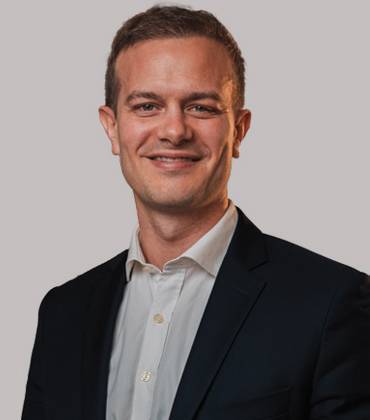
What prevents commodity trading opportunities from translating into accessible institutional financing? In global commodity trading, opportunity alone rarely secures financing. Even when a proven supplier is in place, a buyer is committed and the margins are clear, access to liquidity is not guaranteed. Capital is not scarce. But structuring the transaction in a way that aligns with how the financial institutions assess risk is what builds lender confidence to fund it. That gap has widened in recent years. Traditional bank appetite for mid-market and complex cross-border trade has tightened, while a broader “flight to quality” has pushed capital toward larger, more structured and institutionally aligned transactions. For many trading businesses, the challenge is no longer opportunity; it is translating that opportunity into a form the financial system is willing to support. Resilient International Solutions operates at that critical intersection. Its work centres on representing corporates involved in cross-border trade, from producers and exporters to trading houses and translating their trade transactions into structures the financial market can understand, assess and support. “Our role is less about chasing capital and more about shaping quality transactions into a lender-ready framework, before they ever reach a lender’s desk or a strategic stakeholder,” says Stefan Butler, director.

Investment Services
What challenges arise in managing capital calls, distributions and deployment cycles? Private market investing often requires managing capital calls, distributions and multi-year deployment cycles, which can delay full exposure and create ongoing cash flow complexity. In response, Valhyr Capital introduced XFUND, an evergreen fund combining private equity and private debt within a single structure, simplifying allocation and capital deployment. XFUND combines long-term growth with more immediate income. Private equity supports capital appreciation, while private debt generates early returns, reducing the waiting period often seen in traditional investments. This structure also addresses the J-curve effect, in which returns are limited or even negative in the early years. XFUND blends private debt for early income with private equity for long-term growth, mitigating this effect through earlier income generation. Improving Capital Deployment Efficiency How does early capital allocation influence exposure and deployment efficiency in private markets? Valhyr Capital’s structure reflects Olivier Herbout’s experience in institutional investing and wealth advisory, including roles at Goldman Sachs and as founder of Ramify. Traditional private market investing often allocates capital over several years. This requires investors to manage capital calls, distributions and uninvested cash, which can delay full market exposure.
Trading Solutions

What factors influence execution reliability during rapid market volatility across trading platforms? In trading, conditions can change in seconds. Liquidity thins, spreads adjust quickly and execution conditions shift as volatility builds across European markets. Performance depends on how reliably pricing, execution and trading conditions hold as markets move. Trading.com is a regulated multi-asset platform providing access to invest and leverage trading products, built around consistent execution, transparent pricing and stable trading conditions. Its focus remains on core trading and investing fundamentals rather than feature expansion or promotional positioning, earning recognition as the Top Trading Platform in Europe 2026. Trading parameters are defined from the outset, with adjustments applied only where liquidity requires them. Pricing remains transparent, execution stays within expected ranges and conditions are disclosed in advance, so trades behave as expected when placed. “When traders know how the platform will operate, especially under pressure, they can focus on strategy rather than platform mechanics,” says Theodosis Lapatas, marketing head. Beyond Market Movement How do predefined parameters and monitoring systems maintain stability under changing trading conditions? Stability at this level does not happen by chance. Execution operates within predefined parameters and is continuously monitored. Order behaviour holds steady as trading activity increases and during periods of heightened market stress, order processing times remain consistent, a direct measure of whether infrastructure performs under load. Margin and leverage policies follow the same discipline, held constant without ad hoc adjustments during volatility. Where spread changes are necessary, they reflect underlying liquidity conditions and are signalled to traders in advance.
Trading Solutions

Options Available for Rising Energy Costs.
LatifFaiyaz, Head of Energy Trading, Northern Gas and Power
Investment Services

Insights into Investment Management
Sébastien Hoepffner, Investment Manager / Reponsable Développement at Bouygues Immobilier
Investment Services
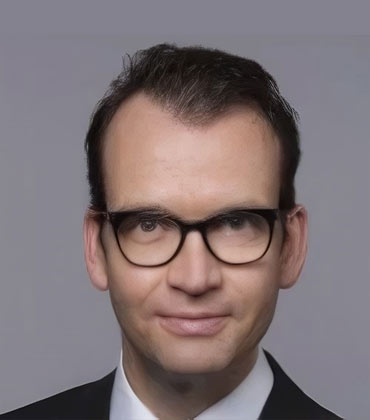
Data-driven Strategies Supporting Effective Conduct Risk Management in Wealth Management businesses
Stefan Rauch, Head Of Compliance, Vp Bank AG [SWX: VPBN]
Investment Services

Risk Management Enters the New Age
Sotiris Papakonstantinou, Head of Risk Management, Optima bank [ATH: OPTIMA]
Debt Collection Agencies

Improve Service – Know your Business to Increase Value
Paul Norton, Director of IT Operations & Services, OSB Group
IN MY OPINION
Regtech
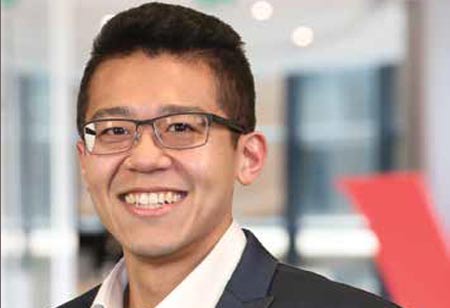
A Crossroads Between AI And Surveillance - A Future State of Optimisation
Jason Shiu, Compliance Manager, Vanguard
LAST WORD
Artificial Intelligence
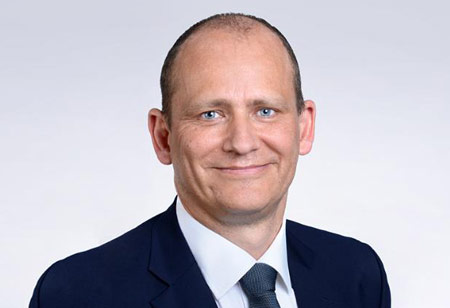
How Is Technology Changing the Private Banking World?
Geoffroy De Ridder, Head of Technology and Operations at Lombard Odier Group
IN FOCUS

Harmonising Stability and Innovation in European Trading Ecosystems
The industry is evolving toward integrated, ESG-centric platforms that use predictive analytics and hardware-level security to ensure resilient European market access.
European Commodity Finance: Market Trends and Transformation
European business commodity financial services enhance liquidity, manage volatility, integrate technology, support sustainability, and strengthen resilient trade finance ecosystems.
EDITORIAL
The New Framework of Financial Execution
Financial markets across Europe continue to face tighter liquidity conditions, regulatory pressure and shifting investor expectations. In this environment, firms that combine disciplined execution, operational clarity and structured risk management are defining the next phase of financial services.
Our cover story, Resilient International Solutions, recognised as the Top Business Commodity Financial Service in UK 2026, has built its position around structuring transactions into lender-ready frameworks. Led by Stefan Butler, the firm aligns logistics, insurance, legal frameworks and risk allocation across the supply chain before positioning transactions with financial counterparties. Its approach has strengthened lender confidence in trade environments while helping corporates improve scalability and certainty.
This edition also recognises Valhyr Capital as the Top Private Equity Fund Investment Services in Europe 2026. Through its XFUND structure, the firm addresses private market challenges including delayed deployment cycles, liquidity coordination and the J-curve effect. By combining private equity and private debt within a single evergreen structure, Valhyr Capital enables more consistent market exposure and disciplined capital management.
Trading.com, recognised as the Top Trading Platform 2026, reflects the growing importance of transparent pricing, stable execution and operational consistency during volatile market conditions. Its focus on maintaining predictable trading conditions, even during periods of heightened stress, reinforces the value of disciplined infrastructure in modern trading environments.
In our CXO Insights section, Jason Shiu, Compliance Manager at Vanguard, examines how AI is reshaping surveillance across trade monitoring, e-communications and voice analysis while reinforcing the continued importance of human oversight in governance and decisionmaking. Geoffroy De Ridder, Head of Technology and Operations at Lombard Odier Group, further explores how technology is transforming private banking through digital engagement, operational agility and stronger data protection without replacing the human element at the centre of client relationships.
Together, the organisations and leaders featured in this edition demonstrate how structured execution, operational discipline and long-term credibility continue to shape the future of financial services.
