
Financial Services Review: Specials Magazine

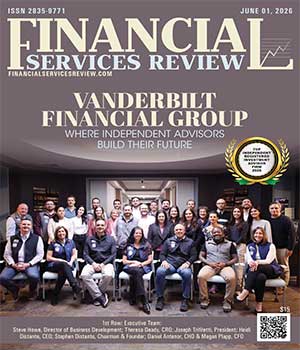
What structural changes are influencing independent financial advisors in today’s broker-dealer landscape? Financial advisors operating in today’s independent broker-dealer landscape face a period of profound structural change, as consolidation and private equity investment reshape expectations around control, continuity and long-term alignment. Vanderbilt Financial Group (VFG) is structured as a direct response to that shift, operating as an independent broker-dealer and registered investment advisor to provide the infrastructure, operational support and institutional-grade systems advisors need to build and scale their practices. The result is a model that removes the traditional trade-offs between autonomy and institutional capability. The Firm’s approach is reinforced through Vanderbilt’s recent adoption of an Employee Stock Ownership Plan (ESOP), which strengthens its long-term commitment to independence and ensures its position of not being for sale or the risk of being acquired. By removing the uncertainty associated with external ownership, the ESOP model aligns every employee with advisor outcomes and ties accountability directly to service. In practice, this extends to day-to-day operations, where advisors have direct access to leadership and support teams, enabling faster decision-making, collaborative problem-solving and responsiveness often difficult to achieve in larger, more layered organizations. This, in turn, supports advisor retention and growth while driving overall firm performance. “Advisors join us because they want independence without isolation,” says Joseph Trifiletti, President. That balance shapes how the Firm operates. Vanderbilt Financial Group is built on the belief that advisors are entrepreneurs, centralizing key operational resources so they can maintain ownership of client relationships while focusing on strategic planning and client engagement.
Alternative Investments

Tips for getting "Unstuck" for the Professionals
Kemi Akinyemi, Senior Managing Actuary, CNO Financial Group
Financial Portfolio Management

Popularization of Generative AI via OpenAI's ChatGPT as a Technological Catalyst
Miguel Navarro, Innovator, Patented Inventor, and Seasoned Digital Leader - Head of Applied Emerging Technologies, KeyBank
Financial Planning/Retirement
The Increasingly Challenging Role of a Mortgage Broker
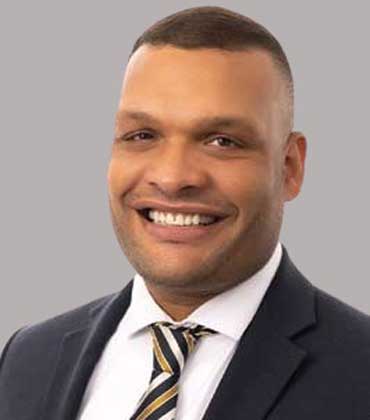
Douglas Wilkerson, Branch Manager, Edge Home Finance Corporation
Accounting Services

Expanding Horizons in Financial Wealth Management Advisory Roles
Business Loan

Multi-Department Fractional Staffing of Fintech
Judson Stanion, Managing Director - Capital Markets, and Jessica Gardner, Chief Marketing Officer, Academy Bank

IN MY OPINION
Business Loan
Profits With Purpose: Unlocking Opportunity in Financial Services
Mack Wallace, VP, Product (Head of Product), MPOWER Financing

LAST WORD
Claim Adjusting
Reinventing Accounting for the Future
Ann Downey, Vice President of Accounting, North American Bancard
IN FOCUS

The Independent Advisor Advantage: Fidelity and Innovation in Wealth Management
Independent registered investment advisor firms deliver fiduciary-driven, technology-enabled, holistic wealth management aligned with client interests and long-term strategic stewardship.
Digital Evolution Redefines Shareholder Management in Transfer Firms
Stock transfer firms modernize through digital platforms, stronger security, analytics, and expanded services to improve accuracy, compliance, and issuer support.
EDITORIAL
Advisor Independence Driving Future Growth
Independent advisory models are entering a defining phase where ownership structure, operational flexibility and long-term alignment increasingly shape advisor success. In this edition of Financial Services Review, the focus highlights firms and leaders advancing independent advisory infrastructure while redefining how financial institutions build resilience, scalability and client trust in a rapidly evolving market.
The cover story features Vanderbilt Financial Group, recognized as the Top Independent Registered Investment Advisor Firm 2026. Through its employee-owned structure, institutional-grade operational support and advisor-centric platform, the firm enables financial professionals to maintain independence without sacrificing scale, technology or strategic flexibility. It reflects a broader industry shift toward advisor models that prioritize autonomy, continuity and entrepreneurial growth while strengthening operational efficiency and longterm practice sustainability.
Expert perspectives further reinforce this direction. Mack Wallace, VP, Product (Head of Product) at MPOWER Financing, highlights how inclusive financial access, alternative data and AI-driven personalization are expanding opportunity while strengthening customer trust and long-term resilience across financial institutions. Ann Downey, Vice President of Accounting at North American Bancard, examines how accounting is evolving from a traditional reporting function into a strategic business discipline shaped by automation, analytics and intelligent decision support.
Advisor independence, operational intelligence and technology-enabled decision making will continue to define the next phase of financial services. As firms navigate changing client expectations, regulatory complexity and accelerating innovation, the ability to combine scalable infrastructure with personalized advisory models and disciplined execution will remain central to sustained growth. We invite our readers to explore the full coverage and engage with the leaders shaping this transformation.
