Financial Services Review: Specials Magazine
![Azimut [AZM: MIL]: Redefining Corporate Investment Banking Through Integration and Independence](https://www.financialservicesrevieweurope.com/uploaded_images/1449-9sho.jpg "Azimut [AZM: MIL]: Redefining Corporate Investment Banking Through Integration and Independence")
Corporate finance has entered a new era. Capital markets are more fragmented, financing options are expanding, and businesses are under constant pressure to adapt to shifting economic conditions. For mid-market companies and institutional investors alike, success is no longer defined solely by access to capital it depends on finding the right partners to navigate complexity and unlock opportunity. Against this backdrop, companies that have the ability to span traditional financial lines are now emerging. Azimut has secured a unique place in Europe, uniting asset management, wealth management and investment banking. Rather than treating these capabilities as separate businesses, the Milan-listed group has created an integrated model designed to connect investors with companies seeking capital, growth, and long-term value creation. Established in Italy and growing globally across the world, Azimut is currently established in 20 different countries, each and every one being serviced by teams on the ground with detailed market knowledge, but combining a wealth of investment expertise and global capabilities. Each of these advisors, investment and senior managers own a portion of the business thus aligning decisions with client interest and long-term objectives.
![Azimut [AZM: MIL]: Redefining Corporate Investment Banking Through Integration and Independence](https://www.financialservicesrevieweurope.com/newstransfer/upload/Asset_Management_Service_and_Investing_Broker_Europe-235xx-.jpg "Azimut [AZM: MIL]: Redefining Corporate Investment Banking Through Integration and Independence")
Financial Risk Management
Skilled hedge advisors with deep expertise in financial risk management are key to enhancing financial stability and ensuring businesses secure favourable outcomes in structured financing. Noveo Finance has been a dominant force in this specialised field for the last 15 years, providing clients with hedging solutions that mitigate the impact of interest rate fluctuations, foreign exchange risks and inflation volatility. An independent consultancy firm specialising in financial risk management, Noveo Finance excels at advising clients on structured financing transactions, particularly in infrastructure projects that require substantial capital and long-term financial planning. Many of these come with extended financing terms, where interest rate sensitivity is a key factor. It works closely with project sponsors, utilities, independent power producers and financial investors to ensure that projects are structured to mitigate financial risks, shield against market fluctuations and maintain stability. "We provide tailored solutions built on our expertise, ensuring each client receives an optimised strategy suited to their specific project," says Oscar Fernandez España, managing partner. These strategies safeguard infrastructure investments by addressing financial uncertainties that arise from extended financing structures. Even minor interest rate fluctuations can significantly impact financial outcomes. For instance, a five-year facility carries a different risk profile than a 30-year loan, where prolonged exposure heightens financial vulnerabilities. To address this, the company structures hedging strategies that optimise financing conditions and allow sponsors to secure financial terms early, minimising exposure during negotiations. Noveo Finance strengthens financial stability by implementing pre-hedging strategies, reducing the risks posed by interest rate and foreign exchange volatility throughout the extended timeline of project finance transactions. This ensures investments remain financially sound despite shifting market conditions. Clients also approach the company for greater transparency in derivative pricing, particularly regarding cross-value adjustments, which include counterparty credit risk and funding value adjustments that influence pricing structures and transaction costs. These highly technical adjustments make expert monitoring critical to maintaining fair pricing and securing the best financial results. This is necessary for refinancing transactions, where restructuring existing hedging strategies can significantly optimise financial efficiency. It helps clients navigate these complexities, ensuring optimal pricing structures and financial outcomes.

Trading Solutions

Trading.com is a regulated European broker offering zero-commission access to investment products through a multi-asset platform. Clients can invest in shares and ETFs through its Investment Account, while the broader platform also supports access to leveraged trading markets, bringing longer-term investing and more active market participation into one ecosystem. In many brokerage environments, transaction-based fees can influence how portfolios are built and adjusted. Smaller allocations may be avoided, rebalancing delayed and unused balances left idle. As portfolios grow or become more diversified, these costs can make portfolio management less practical and narrow how investors use their accounts. Trading.com addresses those limits with an account structure that operates without per-trade commissions, giving clients greater flexibility to build, adjust and maintain portfolios. The account also offers daily interest on uninvested cash, along with optional benefits such as deposit rewards and referral programmes, helping unused balances remain productive. Together, these features create a unified investment experience centred on transparency, stronger account utility and clear pricing for both first-time and long-term investors. That accessibility is reinforced by a simplified account journey in which clients move from registration and verification to funding and market access through one streamlined flow. “Rather than incentivizing trading volume, our focus is on delivering an account experience that is transparent, useful and aligned with long-term investment objectives,” says Theodosis Lapatas, head of marketing. How does a zero-commission model influence portfolio flexibility and investor decision-making processes? Without transaction barriers, investors can rebalance, top up or build positions in smaller increments more freely. Over time, the combination of commission-free investing and interest on unused balances supports more efficient portfolio management and helps investors retain more of their returns, especially as portfolios become more diversified.
Financial Asset Management
For decades, traditional financial institutions have approached asset management through a narrow and outdated lens. Wealth preservation became closely tied to standardised portfolios, bank-led products and conventional investment vehicles that promised stability while leaving investors disconnected from how their money was actually being managed. Clients are expected to trust institutions, hand over their capital and accept strategies shaped by commercial priorities rather than individual financial realities. In an era defined by low interest rates and abundant liquidity, the model appears sustainable. But as inflation erodes purchasing power, geopolitical tensions reshape global markets, and confidence in traditional finance weakens, investors are beginning to question whether the old system is equipped for the future. Within this changing financial landscape, FORTUNA SFP has positioned itself differently. Rather than treating wealth management as a process of selling products, the firm approaches it as a long-term exercise in protecting freedom, stability and financial resilience. At the center is a simple philosophy: true wealth is not defined solely by returns, but by the ability to preserve purchasing power, maintain independence and live with peace of mind in uncertain times. “Many people confuse saving with financial planning,” says CEO José Manuel Marín Cebrián, whose public communication style has helped position him as one of the more outspoken advocates for independent and education-driven financial planning in Southern Europe. He argues that investors today swing between fear and euphoria, reacting emotionally to headlines and volatility without a disciplined long-term framework to guide decisions.
Investment Services

Investing and Data, the Opportunity and the Challenge
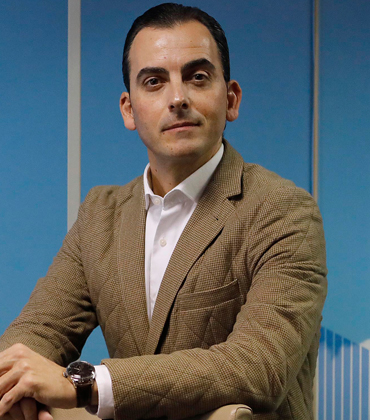
Fabiana Fedeli, Chief Investment Officer Equities, Multi Asset and Sustainability, M&G Investments
Investment Services

Transforming Financial Licensing Services and Industry Trends
Yvan Roduit,Head Investment Advisory,Raiffeisen Group
Financial Risk Management
Money Laundering and Fraud Risks: Threats and Ways to Protect Customers in the Era of Digitalization
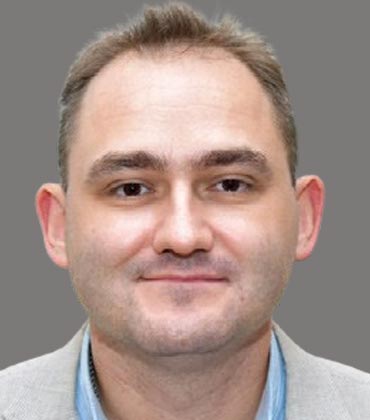
Dr. Artur Golban, Deputy Director of General Compliance and Internal Control, Victoriabank
Trading Solutions

The Future of Asset Management is Personal and Digital
Hildur Eiriksdottir, Executive Director, Asset Management, Íslandsbanki
Alternative Investment

Credo of a CTO: Only Relevant Technology Leverages Insurer's Core Competencies
Martin Thormahlen, Member of Staff, Munich Re
IN MY OPINION
Investment Services
Esg Risk Management In Banking: Pragmatic Insights and Roadblocks
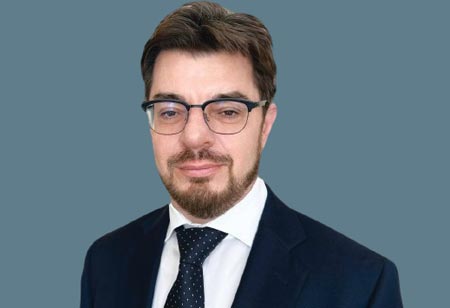
Yaroslav Sovgyra, Head of Credit Risk (ESG and Portfolio Management), Lloyds Banking Group [LON: LLOY

LAST WORD
Financial Risk Management
Regulatory Technology and Digital Compliance
Maria Azinhal, Regulatory Compliance Manager, Caixa Geral de Depósitos
IN FOCUS

Investing in Europe: The Zero-Commission Broker Advantage
Zero-commission investing brokers in Europe are reshaping the investment landscape by reducing costs and increasing market accessibility.

EDITORIAL
Redefining European Financial Architecture through Integrated Capital Models
European financial markets are undergoing significant change as institutions respond to fragmented capital flows, growing regulatory demands and changing investor expectations. As the boundaries between investment banking, asset management and advisory services continue to narrow, more integrated approaches are emerging with a stronger focus on flexibility and long-term value. In this edition of Financial Services Review Europe, we spotlight the organisations and leaders helping shape that transition.
Our cover story recognises Azimut as the Top Corporate Investment Banking Firm in Europe 2026. The company has established a differentiated position by integrating asset management, wealth management and investment banking into a unified model. Through its footprint in 20 countries and its equity-aligned advisory structure, Azimut connects investors with companies seeking capital while reducing friction compared with traditional financial intermediaries.
The organisations recognised in this edition reflect the diversification and specialisation of Europe’s financial ecosystem. FORTUNA SFP is recognised as the Top Asset Management Service in Europe 2026. The firm focuses on wealth preservation and long-term financial resilience through alternative investments, real-economy exposure and a philosophy centred on financial education and stability. Trading.com Services Limited is recognised as the Top Zero Commissions Investing Broker in Europe 2026. The platform enables commission-free investing across multiple asset classes while maintaining regulatory oversight, liquidity efficiency and a unified trading experience for active and long-term investors.
Leadership perspectives featured in this edition add context to these changes. Yaroslav Sovgyra, Head of ESG Risk at Lloyds Banking Group, discusses integrating ESG considerations into risk frameworks, highlighting the roles of analytics, governance and scenario modelling. Maria Azinhal, Regulatory Compliance Manager at Caixa Geral de Depósitos, examines how regulatory technology is reshaping compliance through real-time monitoring and automation while reinforcing the need for continuous professional development.
The organisations and leaders featured in this issue reflect how integrated financial platforms, data-driven governance and evolving risk frameworks are reshaping the future of European financial services. We invite readers to explore the insights presented throughout this edition.
