Financial Services Review: Specials Magazine
![Ameriprise Financial, Inc.[NYSE: AMP]: The Integrated Advisory Model Reshaping Financial Planning](https://www.financialservicesrevieweurope.com/uploaded_images/13-8omz.jpg "Ameriprise Financial, Inc.[NYSE: AMP]: The Integrated Advisory Model Reshaping Financial Planning")
Financial planning has shifted from episodic advice to continuous, system-driven orchestration, where execution discipline and data integration determine client outcomes more than standalone recommendations. Firms operating at scale are expected to deliver synchronized advisory, portfolio construction and risk management within a unified framework. As a result, it has placed pressure on advisors to move beyond fragmented tools and toward cohesive platforms that align strategy with evolving financial conditions. Ameriprise Financial operates within this environment by structuring its advisory model around integrated planning and investment management, combining human expertise with embedded analytical systems. The firm’s approach reflects a broader industry transition toward personalization at scale, in which client portfolios are constructed with precision and continuously recalibrated to reflect shifting goals, market conditions and life events. Enabling Consistency across Advisory and Execution Ameriprise Financial’s advisory model combines financial planning, investment management and protection strategies within a single client experience. Advisors operate using a structured planning process that incorporates goal definition, risk assessment and portfolio design, supported by proprietary tools and research capabilities. At the core of this advisory model is the integration of advisory services with investment solutions. Advisors leverage centralized research, asset allocation models and managed account platforms to construct portfolios aligned with client objectives. By aligning these elements, the firm ensures consistent execution while maintaining the flexibility to tailor strategies to individual financial circumstances. The advisory model is designed to facilitate ongoing engagement rather than one-time planning. Clients interact with advisors through periodic reviews, supported by digital tools that provide visibility into portfolio performance, cash flow projections and goal tracking. Continuous feedback loop ensures that planning remains dynamic, adapting to market movements and personal milestones.
![Ameriprise Financial, Inc. [NYSE: AMP]: The Integrated Advisory Model Reshaping Financial Planning](https://www.financialservicesrevieweurope.com/newstransfer/upload/1-uyxwl-.jpg "Ameriprise Financial, Inc. [NYSE: AMP]: The Integrated Advisory Model Reshaping Financial Planning")
CPA Firms
What challenges do small business owners face in financial management? Amid stacks of invoices, payroll schedules, and tax forms, small business owners juggle their passion with the financial tasks they can’t ignore. Many know where they want their business to go but feel overwhelmed by conflicting advice or uncertain about where to start. Tax Managementtakes responsibility for handling accounting, payroll, and tax requirements so owners can focus on running their businesses with confidence that the fundamentals are being handled correctly. Based in Wisconsin and serving clients across all 50 states, the firm works primarily with small business owners who need ongoing support beyond transactional tax preparation. It works with businesses at different stages, from those just getting started to those navigating growth, by managing bookkeeping, payroll, accounting, tax preparation, and business setup in ways that align with each business's actual operations. Tax Management’s client base includes restaurants, contractors, property management companies, and other owner-operated businesses. On the tax side, the firm serves more than 1,100 clients, including Schedule C filers, S corporations, partnerships, and individual taxpayers.

Financial Planning/Retirement

How does advisor-focused infrastructure improve wealth management for mass affluent investors Zoe Financial operates as an advisor infrastructure designed to remove operational friction while keeping the advisor at the center of the client relationship. Advisors retain ownership of planning, judgment, and long-term guidance while Zoe’s platform handles the portfolio implementation, enabling customized portfolios built on direct ownership of individual securities and disciplined tax management. The Zoe Wealth Platform supports advisors serving mass-affluent clients, from younger professionals with investable assets of USD 150,000+ to individuals and families approaching retirement with portfolios in the USD 1 million to USD 4 million range. Traditionally, these investors use standardized investment structures such as low-cost ETF portfolios with periodic rebalancing. With Zoe, they can get a different experience. “We aim to offer clients the level of capability and sophistication that is usually only offered to high-net-worth investors,” says Andres Garcia-Amaya, CFA, CEO and founder of Zoe Financial. How can direct indexing and tax strategies benefit mass affluent investment portfolios Investment platforms have lowered costs and simplified access to markets, but advanced portfolio construction techniques and tax strategies have often been reserved for high-net-worth investors. Zoe Financial enables advisors to bring those same capabilities to mass-affluent clients through the Zoe Wealth Platform. Advisors can implement direct indexing, automated rebalancing, and tax-loss harvesting while maintaining full responsibility for the client relationship and financial plan. Trading, rebalancing, and transitioning legacy holdings are handled within the platform, allowing advisors to focus on comprehensive planning aligned to a client’s broader financial goals.
Investment Management
Why are private market investors constrained by fragmented data systems? Outcomes First AI Private market decisions directly affect millions of end members, yet institutional investors are often constrained by fragmented, delayed data that increases cost and risk while limiting clarity and conviction. SheltonAI addresses this by operating as a continuous decision engine for private markets, enabling faster, better-informed decisions that improve returns, reduce operational drag, and strengthen governance. The World’s First Asset-Level Operating Engine SheltonAI was purpose-built as the central operating layer for sovereign wealth funds and pension systems investing in private markets. Designed as the home screen for private markets, the AI-native platform replaces fragmented tools with a unified, real-time system for portfolio visibility, risk assessment, and forward-looking decision support that translates complexity into actionable insight and stronger long-term outcomes for members. Mission-Driven Under the leadership of Harrison Shaw, CEO of SheltonAI, the company is redefining what is possible in private market investing by staying anchored to what matters most: members. Shaw has set a goal for SheltonAI to support 100 million pension and sovereign wealth fund beneficiaries by 2026, guiding how the platform is built, prioritized, and measured for impact. Turning Operational Automation into Investment Insight How does SheltonAI automate complex institutional investment workflows? 10x-ing the Hardest Work in Private Markets SheltonAI automates the most time-consuming work institutional investors face by extracting, structuring, and validating data directly from investor documents. The platform interprets fund terms, reconciles cash flows across systems, validates NAVs against custodian records, and automatically updates models as new financials arrive. By capturing up to seven times more data points than manual processes, SheltonAI significantly reduces the time teams spend on data preparation.

CPA Firms

For most taxpayers, working with a CPA follows a predictable pattern: gather documents, file the return, and hope the number owed isn’t too painful. But according to Steven Gabrielsen, CEO of Creative Advising, that approach misses the real opportunity. “Traditional CPA firms focus almost entirely on tax preparation,” Gabrielsen explains. “The problem is that by the time you’re filing the tax return, it’s already too late to change anything.” Creative Advising was built to solve that problem. Instead of reacting to taxes after the year is over, the firm focuses on proactive planning throughout the year—helping clients legally reduce their tax liabilities while building long-term wealth. For many clients, the results are dramatic. On average, individuals and business owners working with Creative Advising are able to reduce their overall tax liability by 60% to 80% after implementing strategic tax planning.
Financial Planning/Retirement

The Financial Advisor Retirement Wave
John Turner, VP - Investment Advisor Lending, Live Oak Bank
Financial Planning/Retirement

Dealing With Global Tax Compliance
Sergio Vazquez, Transfer Pricing Director, CEMEX
Financial Planning/Retirement
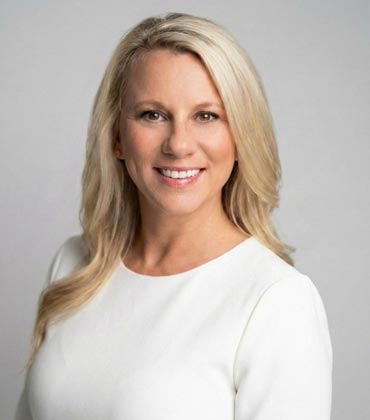
The Strategic Lens: Navigating the Agency "Push and Pull"
Lindsay Haun, MBA, Vice President of Financial Planning & Analysis, BarkleyOKRP
CPA Firms

Navigating the Evolving Landscape of Job Markets and Recruitment: Embracing Technology Advancements With a Strategic Focus
Paul S. Young, Chief Financial Officer, Liberty Bank – CT
CPA Firms

Efficient AI Teams in the age of Generative AI
Michael Mocanu, Sr. Director, Technology Data Science & Data Governance, Liberty Mutual Insurance

IN MY OPINION
CPA Firms
Turning Strategic Clarity into Everyday Culture
Tina Downing, Senior Director and Lead of AIS Business Solutions, Russell Investments

LAST WORD
Financial Planning/Retirement
Growing Market Share with Customized Banking Solutions
Jack M Jacobs, Senior Vice President of Corporate Banking, WesBanco Bank Inc [NASDAQ: WSBC]
IN FOCUS

Institutional AI Investment Solutions: Driving Intelligent Capital Allocation
Institutional AI investment solutions enhance decision-making, portfolio optimization, risk management, and governance through advanced analytics, automation, and adaptive intelligence frameworks.
Integrating Innovation and Strategy: The New Face of Accounting Services
Accounting services drive long-term value by integrating financial insight, strategy, technology and sustainability to support informed decisions and resilient business growth.
EDITORIAL
The Rise of Continuous Financial Planning and Operational Discipline
Financial services are moving toward integrated, executiondriven models where continuous planning, data visibility, and operational discipline define outcomes. This edition examines how firms are replacing fragmented approaches with coordinated systems that align advice, execution and long-term financial strategy.
Our cover story, Ameriprise Financial, Inc. [NYSE: AMP], recognized as the Financial Planning Advisors leader, reflects this shift through an integrated advisory model that combines planning, investment management and protection strategies within a single framework. Advisors follow a structured, goal-based process supported by centralized research and analytical tools, enabling consistent execution with personalized strategies.
Among this year’s award recipients, Creative Advising, recognized for Top Tax Strategies and Bookkeeping Service 2026, advances proactive tax planning through a structured quarterly system that ensures strategies are implemented throughout the year and not deferred to filing cycles. Shelton AI, awarded Top Institutional AI Investment Solutions 2026, operates as an AI native decision engine for private markets, transforming fragmented data into real-time portfolio visibility and risk insight.
Tax Management, recognized as a Top Accounting Services 2026, provides small businesses with integrated bookkeeping, payroll, and tax support that creates operational clarity and consistency. Zoe Financial, awarded Top Financial Advisor Services 2026, enables advisors to deliver institutional-level portfolio strategies to mass-affluent clients while retaining control over planning and relationships.
In CXO Insights, Tina Downing, Senior Director and Lead of AIS Business Solutions at Russell Investments, emphasizes that strategy is defined by clarity, intentional execution and aligned teams rather than activity. Jack M Jacobs, Senior Vice President of Corporate Banking at WesBanco Bank Inc., highlights the role of relationship-driven banking and tailored financial solutions in optimizing cash flow, managing risk and supporting long-term growth.
Together, these perspectives point to a clear direction for the industry. We invite you to explore this issue and examine how these models translate strategy into sustained financial outcomes.
