Fiduciary Services Provider | Financial Services Review Europe

Fiduciary Services Provider

Fiduciary Services Provider organization entrusted to manage assets, investments or obligations in the best interests of clients or beneficiaries. Combining fiduciary oversight, compliance expertise and wealth management capabilities, these providers support trusts, estates, retirement plans and institutional accounts while maintaining transparency, accountability and regulatory adherence.

KJLK & CO: Democratizing Alternative Investments
KJLK & CO
KJLK & CO: Democratizing Alternative Investments
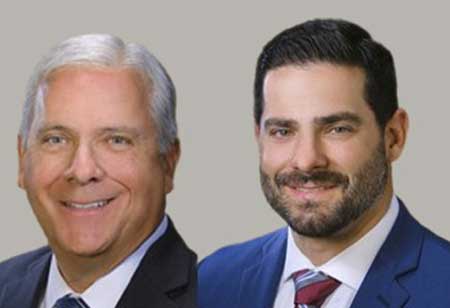
Joe LaTurner, Founder and Principal
Alternative investments are gaining momentum as investors seek enhanced returns and more negatively correlated opportunities in their diversified portfolios. While high barriers to entry and regulation typically restrict access for non-accredited investors, the lack of liquidity is also a concern for accredited individuals and institutional players due to long lock-up periods and potential gate issues. This can pose a significant challenge in today’s volatile financial markets.

Finally, a product exists that will provide non-accredited investors access to alternative investments while also offering liquidity. KJLK & Co. has developed a groundbreaking solution: the auction fund, which aims to:

1. Reduce volatility

2. Elevate yield

3. Enhance diversification

This innovative closed-end fund combines the high returns, consistent alpha, and low beta, of orthodox alternative strategies and private market exposures with the liquidity and convenience of traditional securities. It features a unique mechanism in which its net asset value (NAV) will eventually be calculated every 25 days. Investors can trade their subscription units in a secondary market and redeem their investments at these regular intervals, addressing the liquidity concerns that have historically limited broader participation in true alternative strategies and private market investments. This feature, along with its perpetual open-ended structure, allows KJLK & Co. to offer liquidity while opening a new avenue for retail and non-accredited investors.

KJLK’s investment philosophy is rooted in value-oriented, conviction-based investing, with a focus on productive assets, strategies, and free cash flow rather than just profitability

"Now is the time to rethink alternative investments and private markets," says Joe LaTurner, founder and principal of KJLK & Co.

The auction fund represents a significant advancement in the alternative strategy and private market investment space, making previously exclusive opportunities more accessible to a wider range of investors.

New Product in the Alternative Investment Market

KJLK’s auction fund is a closed-end product with a perpetual open-ended mechanism, allowing the company to continuously sell subscription units in the primary market. This approach provides investors with liquidity within a typically illiquid closed-end fund structure.

Building Trust in Wealth Stewardship: The Modern Fiduciary Experience

The fiduciary services sector is evolving from traditional financial oversight to becoming integral to long-term wealth management, succession planning, and risk mitigation. Providers now act as trusted partners, managing complex financial portfolios and offering advice on wealth preservation and tax optimization. With wealth accumulation expanding across generations, financial portfolios have become more complex.

These complexities demand sophisticated management and the ability to navigate various governance, regulatory, and technological changes. As fiduciary services evolve, the market is shaped by increasing client demands, regulatory shifts, and the integration of innovative technological solutions.

The Changing Landscape of Fiduciary Services

Today’s fiduciary services are defined by a drive for more personalized and comprehensive financial stewardship. Clients now demand tailored solutions encompassing the full range of their financial lives. Fiduciaries now provide more than basic wealth management; they use comprehensive strategies encompassing tax management, estate planning, family governance, and philanthropy.

Technology plays a central role in reshaping fiduciary services. Blockchain and artificial intelligence (AI) are two of the most significant innovations in this space. AI enables fiduciaries to provide more personalized recommendations through data analysis and identifying trends that help shape investment strategies. With its secure and transparent framework, blockchain transforms how fiduciaries handle transactions and manage complex multi-party investments.

The demand for services related to environmental, social, and governance (ESG) is also on the rise. Clients are more frequently seeking ways to align their financial decisions with their values, which has increased demand for socially responsible investing (SRI) and impact investing. This trend has pushed fiduciary service providers to adapt and offer specialized advice on sustainable financial management.

Challenges and Innovations in the Fiduciary Sector

Despite the opportunities, the fiduciary services sector is not without its challenges. The evolving regulatory environment is the most pressing concern. Regulatory compliance is complex and varies across jurisdictions, and fiduciary service providers must navigate an increasingly complicated landscape of rules and regulations. Non-compliance can result in severe fines, making it critical for firms to invest in regulatory technology (RegTech) to stay on top of new rules.

Equally important is maintaining client trust. Fiduciaries handle sensitive financial data and large sums of money, so any hint of mismanagement or a breach of trust can have significant consequences. This drives firms to focus on building robust risk management frameworks, strengthening data security measures, and ensuring transparency in their operations. Technology is significant in managing these risks, with firms turning to advanced cybersecurity measures and blockchain to boost transparency and ensure the safety of client assets.

The global nature of modern investments also presents a significant challenge for fiduciaries. Multinational families, trusts, and businesses require fiduciaries adept at navigating diverse tax regimes, legal frameworks, and currencies. This complexity requires firms to expand their expertise and offer solutions tailored to various regional and international contexts. In response, many firms invest in global expansion and diversification, bringing expertise from various jurisdictions to meet their clients’ needs.

Many fiduciary firms are adopting automation and AI-driven solutions to address these challenges, streamline operations, and improve efficiency. These technologies can help fiduciaries monitor client portfolios in real time, assess risks, and identify opportunities. As a result, firms can provide more timely and informed advice, further strengthening their relationships with clients.

Opportunities in Fiduciary Services

Amidst these challenges, significant opportunities for growth and innovation continue to emerge. One key opportunity is the potential to attract a new generation of clients. Younger generations, particularly millennials, are increasingly seeking financial services aligning with their values. These clients tend to be more focused on ethical and sustainable investing, which is creating demand for fiduciaries who can offer specialized advice on impact investing and ESG-driven financial strategies.

The integration of advanced technologies also presents numerous opportunities. Cloud computing, data analytics, and automation transform how fiduciary firms manage client portfolios and deliver services. These technologies improve operational efficiency and allow fiduciaries to provide more personalized and data-driven advice. Clients increasingly seek real-time insights and greater transparency; technology enables firms to deliver this.

Additionally, the focus on ESG investments will continue to grow, with clients looking for ways to make their investments work for financial gain and positive social impact. Fiduciary firms that can provide expertise in sustainable finance—particularly in areas like green bonds, renewable energy projects, and socially responsible investing—are positioned to cater to a growing market of clients who want to align their wealth with their values.

Fiduciary services are evolving rapidly as the market adapts to new technological innovations, regulatory changes, and the increasing demand for personalized and sustainable financial strategies. Providers that embrace new technologies, build strong client relationships, and offer specialized services in areas such as ESG investing will be best positioned for success in the future. The opportunities for growth in the sector are abundant, with expanding client bases, technological advancements, and the rise of socially conscious investing creating new avenues for fiduciary firms to explore.

Mastering Risk with Precision and Integrity
Wells Fargo
Mastering Risk with Precision and Integrity
Lisa Levine, Executive Director, Fiduciary Oversight

With deep expertise at the intersection of law, compliance and fiduciary operations, Lisa Levine brings unmatched precision to risk management in the financial services sector. As Executive Director and Director of Fiduciary Oversight at Wells Fargo, she leads comprehensive programs safeguarding trust services through rigorous compliance, thoughtful legal navigation and unwavering ethical standards.

Making Complexity Work for the Institution

Fiduciary compliance has always been a high-stakes endeavor—but today, it’s also a key test of institutional resilience. With shifting regulations, sophisticated client demands and the ever-present risk of reputational fallout, organizations can’t afford to treat it as a checkbox exercise. Lisa Levine understands that better than most.

Armed with an LL.M. in Taxation from NYU and decades of experience at firms like Goldman Sachs, Bessemer Trust and Merrill Lynch, Levine doesn’t just navigate complexity—she makes it functional. Her work, whether in trust oversight, AML compliance or collective fund governance, is marked by quiet rigor: efficient, methodical and rooted in real-world constraints.

She’s not the kind of leader who chases headlines. Instead, she builds systems that hold up over time—structures that regulators respect, colleagues rely on and clients never have to think twice about.

From Legal Expertise to Operational Precision

What makes Levine’s work stand out isn’t just her legal background— it’s how seamlessly she moves between theory and execution. She can walk into a policy discussion, decode regulatory language and translate it into daily procedures without skipping a beat. And when she’s managing an internal audit or interfacing with regulators, it’s not about scrambling to fix gaps—it’s about showing the strength of what’s already in place.

“She doesn’t overengineer compliance, but she never leaves it vulnerable. Few get this balance right and it’s earned her trust inside some of the most tightly regulated corners of the financial world”

That’s where her judgment shows. She doesn’t overengineer compliance, but she never leaves it vulnerable. Few get this balance right and it’s earned her trust inside some of the most tightly regulated corners of the financial world.

Reframing Risk as a Strategic Lever

At Wells Fargo Trust Services, Levine’s focus is clear: not just managing risk but staying ahead of it. She’s helped shape oversight systems that adapt to the speed of regulation, scaling without sacrificing precision. In doing so, she’s reframed how institutions think about fiduciary governance—not as an afterthought but as a foundation for long-term credibility and business health.

Where others react, she builds infrastructure. Where some view compliance as a constraint, she sees a chance to lead differently—to earn trust in an increasingly skeptical world.

In a sector where missteps make headlines, Lisa Levine’s work rarely does. And that’s the point. Her impact shows up in the absence of crisis, in the quiet confidence of a well-managed portfolio and in the kind of internal discipline that never needs to be rescued.

Fiduciary Services Provider FAQ

Q1
What Do Fiduciary Services Providers Help Individuals and Organizations Manage?
Top Fiduciary Services Providers help individuals, families, investment funds, nonprofit organizations and institutional clients manage financial responsibilities with a legal and ethical obligation to act in the client’s best interest. These services often include trust administration, investment oversight, estate planning support, fund governance and wealth management coordination. Many fiduciary service providers also assist with trustee responsibilities, compliance oversight and long-term asset protection strategies designed to support multigenerational financial planning.
Q2
What Services Are Commonly Included in Fiduciary Services?
Top Fiduciary Services Providers commonly offer trust administration, estate settlement, investment supervision, retirement planning and fiduciary oversight for institutional and private clients. Some fiduciary management firms also provide delegated investment management, fund administration, governance support and family office services. Fiduciary financial services may support pension funds, nonprofit organizations, private wealth clients and alternative investment structures depending on the organization’s specialization. Many providers also coordinate with attorneys, accountants and investment advisors to create integrated financial management strategies.
Q3
Why Is Demand Growing for Fiduciary Services Providers?
Demand for Top Fiduciary Services Providers continues to increase because individuals and institutions face greater financial complexity, regulatory oversight and long-term wealth management challenges. Growth in alternative investments, intergenerational wealth transfers and retirement planning needs has expanded demand for fiduciary expertise and governance support. Institutional investors and nonprofit organizations are also increasingly seeking delegated fiduciary management models that provide integrated investment oversight and operational accountability. Expanding private market participation and trust-based financial structures continue to influence the growth of fiduciary services globally.
Q4
How Do Clients Evaluate Fiduciary Services Providers?
Organizations and individuals evaluating Top Fiduciary Services Providers often compare independence, transparency and experience managing complex financial structures. Buyers may also assess governance capabilities, investment oversight processes and regulatory compliance expertise. Fiduciary management companies are frequently reviewed based on communication quality, conflict-of-interest policies and long-term client relationship management. Institutional clients may additionally prioritize providers with expertise in trust administration, fund governance and alternative asset management oversight.
Q5
What Value Do Fiduciary Services Providers Deliver?
Top Fiduciary Services Providers can help clients improve financial oversight, strengthen governance and reduce the risks associated with complex wealth and investment management decisions. Professional fiduciary oversight may improve investment discipline, succession planning and long-term financial continuity while supporting compliance with legal and regulatory responsibilities. Fiduciary financial management services also help organizations coordinate investment, trust and estate strategies more efficiently. For families, nonprofit organizations and institutional investors, fiduciary support can contribute to stronger accountability and long-term asset preservation.
Q6
How Are Innovation and Technology Influencing Fiduciary Services?
Innovation continues to shape Top Fiduciary Services Providers through digital reporting platforms, predictive analytics and integrated wealth management technologies. Many fiduciary technology providers are adopting cloud-based governance systems, automated compliance monitoring and advanced portfolio analytics to improve transparency and oversight. Emerging technologies in digital trust administration, cybersecurity and data-driven investment monitoring are also transforming fiduciary operations across institutional and private wealth environments. Expertise in financial technology, governance frameworks and risk analytics has become increasingly important as fiduciary management grows more sophisticated and globally interconnected.