

Weekly Brief
×Be first to read the latest tech news, Industry Leader's Insights, and CIO interviews of medium and large enterprises exclusively from Financial Services Review
Financial Services Review: Specials Magazine
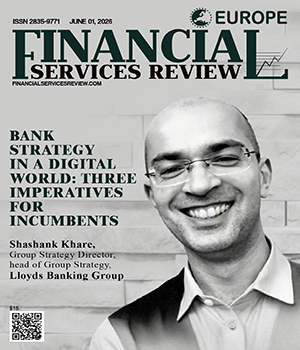
The already rapid pace of digitisation in banking has accelerated under Covid’s impact. Digital has become the default mode for most people to engage with their financial services provider and transact. In 2020, nearly three-quarters of UK banking customers regularly used digital channels and more than a quarter have an account with a digital-only bank . This trend is expected to continue. Therefore, for future success, incumbent banks need to ensure that their strategy is digital at its heart. There are three key elements of success for a bank, as indeed any other business. First, understand customer needs and how they are likely to change. Second, be creative with ideas for solutions which meet those needs better than others in the market. Third, be able to quickly execute on those ideas. The challenge for incumbent banks in today’s market is that the bar for the second and third elements has been reset significantly higher by the rise of neobanks, fintech firms, and big technology companies. They have changed customer expectations through creative solutions across the entire journey. Moreover, using Agile development approaches aided by new technology, they have launched a steady stream of new solutions and features. This has exposed the comparatively slow execution speed of incumbents who have largely played catch-up. To win in a highly competitive market, incumbents need to improve on each of the three elements. Incumbents should start with their core strength of understanding customers and their needs. The richness of data and the expertise built over decades is a competitive advantage. However, data needs to be turned into usable insight. Therefore banks need to create data and analytics capability which can underpin personalised engagement and tailored propositions. They should also use it to increase efficiency through improvements in internal processes, which reduce errors and failure demand. This will provide an additional competitive advanta
FinTech
How can artificial intelligence improve insurance pricing transparency and competitive positioning? The insurance industry is under increasing pressure: a lack of transparency in competition, rising distribution costs and shrinking margins are hindering sustainable growth. At the same time, it is becoming clear that traditional approaches to product development and pricing are often too slow and not data-driven enough. This is precisely where a technology comes in that has already been validated in the market and is now entering a new phase. At the centre is finsago, a fully developed AI system that can precisely replicate insurers’ pricing logic—without APIs or direct partnerships. Based on publicly available and lawfully collected data, pricing models from other providers are accurately simulated and made available in real time—with a forecasting accuracy of around 98 per cent. The system is scalable across markets like insurance, banking and energy, and offers high-impact applications or modules for pricing, product development and sales for insurers, banks, software companies, consultancies, broker pools and tech companies. How is AI Pricing transforming insurance advisory, lead generation and sales conversion? All price simulations, for example, feed an AI agent that bridges the gap to the end customer. As an intelligent, dialogue-based assistant, it combines advice with integrated pricing simulations and competitive comparisons. Users receive real-time indicative prices as well as transparent initial evaluations of offers. For insurers and sales partners, this means significantly improved pre-qualification, more efficient advisory processes and rising conversion rates. At the same time, risk selection can be carried out more precisely, which has a positive effect on the loss ratio. Additional use cases for sales include a metasearch engine as a lead g.

Payment Solution

Pavo’s journey in the fintech industry began in 2013 as part of Aktif Bank’s contribution, Turkey’s largest privately owned investment bank. This collaboration marked the start of Pavo’s rise as one of the country’s leading payment and collection solutions providers. From the outset, the mission was clear—to offer innovative solutions that transform how businesses handle payments and collections while staying fully compliant with regulations. What sets Pavo apart is its strong emphasis on technology. With 65 per cent of its team in tech roles, the company has built a culture of innovation. Pavo stays ahead of trends and adapts to clients’ changing needs through a strong focus on R&D, creating high-quality, tailored solutions for business-specific challenges. Pavo also benefits from strategic partnerships with banks, payment facilitators, software providers, and private integrators. As a licensed private integrator, the company develops tools tailored to specific industries in collaboration with these partners. It is also among the first four organizations to receive an Operator Institution License from the Turkish Revenue Administration. This license enables all internal and external applications to run on a POS device that complies with Turkish Regulations. A turning point came in 2019 with the mandated transition to Secure Mobile Payment and Electronic Document Management Systems. Between 2013 and 2019, Pavo became an undeniable player with around 250,000 licensed cash register POS devices and became a sector leader via 80,000 value-added applications. In the two years that followed, it built the necessary infrastructure according to new secure payment regulations, established its R&D team, and surpassed 100,000 sales—excluding pilot sales—setting the stage for the fastest-growing fintech company. As cash use declines and kiosk-based payments expand, Pavo has rolled out cashierless solutions across supermarkets, restaurants, hotels, airports, parking areas, and highways. Strong customer feedback has fueled continued growth in this space. There is still more to achieve in next-gen payment systems, and Pavo remains ambitious. New projects include solutions for unattended devices and SoftPOS, ensuring the company remains one of the great players in Turkey’s evolving payment ecosystem. Backed by Aktif Bank’s powerful financial network, Pavo is committed to shaping the future of digital payments.
Financial Risk Management
In a world where funding is tight and uncertainty is high, the right valuation report can unlock growth— or block it. In today’s volatile and innovation-driven markets, valuation is no longer a back-office task—it is a strategic tool. Business Valuation International (BVINT) brings clarity to capital decisions across the full company lifecycle, from seed-stage startups and Series A scale-ups to pre-IPO and mature private equity-backed businesses. Instead of relying on static models and outdated methodologies, BVINT uses advanced tools like Monte Carlo simulations and real options pricing to map out future probabilistic scenarios and quantify risk. With deep sector expertise, a global presence, and a proven track record of helping founders raise capital, BVint delivers more than financial assessments. “BVint valuation is not just numbers — it is about confidence. And confidence moves capital,” says Dr. Fernando Scarpati, CEO. The company is delivering clarity, strategy, and investor-ready insight—at a time when founders / owners / CEOs / CFOs need it most. Behind every model is the weight of real-world expertise. BVINT’s team brings over two decades of experience across private equity, venture capital, investment banking, and global consulting. Having sat on both sides of the table, they understand what truly drives investor confidence. Importantly, BVint operates with complete independence—offering objective valuations that are free from fundraising mandates or transaction-driven incentives. This commitment to unbiased insight is supported by a global footprint, with offices in London, Geneva, Malta, and India, and an upcoming presence in Miami. The India office serves as the firm’s analytical powerhouse, staffed entirely by senior analysts who ensure speed, depth, and precision at every step. Every client engagement draws on this collective intelligence, grounded in practical experience and united by a shared mission to deliver insights that matter. “We give clients clarity on the volatility of key business drivers— insight others cannot provide without sophisticated probabilistic models,” says Dr. Scarpati. Armed with that clarity, founders and capital providers engage the market with sharper confidence and a story that resonates where it matters most; the future. Why Traditional Valuation Models Fall Short Traditional valuation models were built for an era dominated by tangible assets and predictable cash flows, but they struggle to capture the realities of today’s innovation-driven economy. Much of a company’s value now lies in intangible drivers—proprietary technology, customer data, intellectual property, brand equity, network effects, management strength, sustainability initiatives, and forward-looking milestones—elements that rarely show up on conventional financial statements or can be fully measured with backward-looking metrics. This gap is particularly evident in early-stage and high-growth companies, which are evaluated less on historical performance and more on what they are positioned to achieve in the future. Static, assumption-heavy models rooted in fixed forecasts are simply not built for such environments of uncertainty and rapid change. BVINT addresses these challenges with a modern, multi-dimensional approach designed for complexity and dynamism. By leveraging advanced tools like Monte Carlo simulations and real options pricing, BVint analyzes thousands of potential future scenarios to quantify both risk and opportunity. Rather than delivering a single-point estimate, this process reveals a full spectrum of possible outcomes grounded in real-world conditions and structured assumptions. It is especially powerful for early-stage businesses where historical data is limited; instead of penalizing founders for being new, BVint’s models highlight their upside potential while transparently integrating risk to build credibility with investors. The result is a valuation that doubles as a decision-making tool, helping businesses plan strategically, prepare for capital raises, and pivot with clarity.

Financial Portfolio Management

Making Impact In Organisation
MariiaAbdullina, Head of Transformation Office, Raiffeisen Bank Ukraine
Specialty Finance

Machine Learning in Finance
Emmelda Lawrence, Manager, Digital Servicing - Commercial Cash Management/Treasury Solutions, Fremont Bank
Investment Services

Monetary Policy and Market Dynamics: Strategic Approaches To Bonds And Equities
Antonio Del Vaso, Head of Investment Advisory, Volksbank, South Tyrolean People's Bank
Alternative Investment

Embracing Data, AI, and Emerging Technologies for Competitive Advantage
Francesco Giordano, Head of Engineering – Data, AI & Cloud, Generali Investments
Alternative Investment

Implementing a Central Cloud Deployment Platform
Tonino Greco, Head of Cloud, Infrastructure, and Operations, River Island

IN MY OPINION
Investment Services
Monetary Policy and Market Dynamics: Strategic Approaches To Bonds And Equities
Antonio Del Vaso, Head of Investment Advisory, Volksbank, South Tyrolean People's Bank

LAST WORD
Finance Invoice Factoring
Scale with Value - Digital Transformation from a Finance Perspective
Jerome Adams, Head of Finance Insights & Data Analytics, Shawbrook Bank
IN FOCUS

Online Trading in Europe: Unlocking New Financial Horizons
Online trading provides a wide range of investment opportunities, low-cost solutions, and quick transactions.
Europe's AI Revolution: Shaping the Future of Financial Services
AI transforms European finance through automation, personalisation, collaboration and data-driven innovation, improving efficiency, customer experience and sustainable growth across institutions.
EDITORIAL
AI Pricing Reshaping Financial Services
Artificial intelligence is changing how financial institutions approach pricing, analytics, customer engagement and operational performance. As market conditions become more volatile and customer expectations continue to rise, firms are under pressure to make faster decisions while protecting margins and maintaining transparency. Across the industry, data-driven platforms are helping organisations modernise processes, improve pricing accuracy and build more scalable operating models. In this edition of Financial Services Review Europe, we examine how AI-powered financial solutions are supporting a more responsive financial ecosystem.
Featured in the cover story, Shashank Khare, Head of Group Strategy, Lloyds Banking Group, shares insights on building a digital-first banking strategy centered on customer insight, data and analytics, agile execution and innovation. Through his perspective, digital transformation continues to evolve beyond operational enablement into a strategic differentiator that supports customer engagement, business agility and long-term competitive growth.
Finsago, recognised for Top AI-Based Financial Solution in Europe 2026, delivers a validated AI pricing platform that replicates insurer pricing logic with high forecasting accuracy, enabling real-time simulations, competitive benchmarking and advisory support to improve pricing decisions, product strategy, sales alignment and risk evaluation.
This edition also features perspectives from financial leaders navigating broader market and operational shifts. Antonio Del Vaso, Head of Investment Advisory at Volksbank • South Tyrolean People's Bank, discusses how interest rate movements, fiscal policy and changing market conditions are influencing bond and equity strategies, highlighting the importance of disciplined portfolio positioning and balanced risk management.
Meanwhile, Jerome Adams, Head of Finance Insights & Data Analytics at Shawbrook Bank, explores how automation, analytics and digital transformation are reshaping finance functions. Finance teams are increasingly moving beyond traditional reporting roles to support forecasting, operational planning and enterprise-wide decision-making.
Together, the organisations and leaders featured in this edition reflect how AI is becoming central to pricing strategy, financial analysis and operational agility. As institutions continue balancing innovation with resilience, scalable and data-centric systems will shape the next phase of financial transformation across Europe.
